Western Trips

Showing posts with label Mining. Show all posts

Thursday, January 1, 2015

Breckenridge Colorado Attractions / An Old Mining Town and Resort


breckenridge colorado view
A View of Breckenridge, Colorado
Breckenridge Colorado
, a great place to visit anytime during the year, has it's roots back in the heydays of Colorado gold mining. The first settlers came into Summit County Colorado in 1859 during the time of the Pikes Peak Gold Rush. What was a base camp for the miners would turn into the town of Breckenridge.

As the California Gold Rush demonstrated, a mining camp can turn into a town virtually overnight. One year later in 1860 a post office was established to serve more than 8,000 people. Today Breckenridge has the distinction of being Colorado's largest historic district containing more than 350 historic structures.

Breckenridge as a Mining Town / Mine Sites to Visit

The town of Breckenridge was settled to serve the miners working the placer (surface) gold deposits and today there are fun activities for the entire family taking you back to the era of the gold mines.

breckenridge colorado mines
Photo of old Country Boy Mine
The Country Boy Mine, opened in 1887, was one of the largest and most famous gold mines in Breckenridge. Take a  mine tour into a real gold mine at this historic restored mining site. While at the mine you can also pan for gold. Directions to the Country Boy Mine from downtown Breckenridge are as follows...From the center of town head North on Main Street.Take a right onto Wellington Road (Wellington Road is 1 block north of Ski Hill Road/Lincoln Avenue).Continue on Wellington Road east for 1 mile. Wellington Road becomes French Gulch Road.Veer right onto French Gulch Road continue for 1 mile.The mine is located on the right. For more information on the Country Boy Mine see website.....http://www.countryboymine.com/ 

 breckenridge colorado downtown
Winter in Breckenridge
Another Breckenridge attraction is the Lomax Mine. The mine is located near downtown Breckenridge and was an active hydraulic placer mining operation in the 1860's. Visit this old mine today and an expert guides will take you way back in time to Breckenridge's early mining days. Step inside a miner’s cabin, see original hydraulic mining equipment and learn to pan for gold. For more information on the Lomax Mine see website.....http://breckheritage.com/lomax-placer-mine-tour-and-gold-panning-site/#

The Washington Mine was one of the area’s largest underground mines in the 1880's. The underground size of the mine was more than 10,000 square feet. Visitors to the Washington Mine today will see the methods, equipment, lifestyles and hardships of the hard rock mining era in Colorado's Summit County. Your tour of the Washington Mine will take you underground for a first hand mining experience. The kid's will learn how to pan for gold and any gold they find they can keep.

Visit the Red, White and Blue Fire House Museum.The all volunteer Breckenridge Fire department was founded in 1880. Towns during the 1800's, especially those mining towns that grew fast, were largely constructed of wood. Because of this the fire demon could strike at any time. Many of the California gold country mining towns that sprang up in the early 1850's, also built mostly of wooden structures, suffered devastating fires, some more than once.

The name for the Breckenridge Colorado museum and the fire department came from the fact that the department first established three different fire fighting companies. The Fire Museum displays an original human-powered ladder cart, a restored hose cart as well as fire fighting equipment and uniforms from the first companies. The Breckenridge Fire Department over all these decades was comprised of miners, teamsters, saloon keepers, local merchants and many others who worked side by side fighting fires. The Fire Museum is open year-round with tours conducted by modern firefighters.

restaurants breckenridge colorado
Breckenridge restaurant
Breckenridge Colorado Today

Breckenridge is the oldest and largest town in Colorado's famous Summit County. Breckenridge has been referred to as the perfect mountain town. It is the largest downtown historic district in the state.

Through music, film, theater, visual arts, galleries, museums, historical sites, and educational programs, Breckenridge Colorado offers a perfect Colorado mountain
experience.

You may also enjoy additional Western Trips articles on Colorado vacation destinations found on the links below...

A Visit to Historic San Luis Colorado

Visit Historic Colorado / Cripple Creek 

Killdeer Mountain Four Bears Scenic Byway / ND

Attractions in Breckenridge cover the entire year. Summers in this mountain getaway find visitors  hiking, biking,  fishing and enjoying gold mine tours plus taking in the mild weather. Winter is a time of skiing and winter sports of all kinds. Breckenridge Colorado has a large world-class mountain with 155 trails and 31 lifts including the highest one in North America. No matter the season, a trip to this friendly town makes a perfect vacation or long weekend.

(Article and photos copyright Western Trips. Old Country Boy Mine photo in public domain.)

Sunday, July 7, 2013

Silver City New Mexico


palace hotel silver city nm
Palace Hotel, Silver City, NM
Silver City New Mexico is a historic town in New Mexico in a very scenic part of the state that offers many attractions for both history lovers and recreational enthusiasts.The town was named Silver City because rich deposits of chloride silver were discovered just west of town during the 1870's. Silver City's growth took off after this discovery. A lumber mill was established shortly afterward using the vast nearby timberland to supply wood for the mines.

Open pit copper mining processes can even be viewed today at a site about fifteen miles west of town. Minerals have been produced from this very same site since the 1880's. It's one of the largest of it's type in the United States. Another open pit site about twelve miles south of Silver City yields about 50,000 tons of copper ore today. Mining obviously is still a big industry in the modern Silver City.

The Town of Silver City sits atop a site that has been home to Native American, Hispanic and Anglo settlers for hundreds of years. 


silver city hotels
Palace Hotel lobby
As a side note, and Silver City's connection to the old wild west, it's said that William Bonney, better known as Billy the Kid, experienced his first arrest and incarceration in Silver City. While The Kid went on to infamous notoriety, his family did reside in Silver City for years. William Bonney's mother is buried in the town cemetery.

Located about 230 miles south of Albuquerque and about 40 miles west of Interstate 25, Silver City is the jumping off point to some of the most popular attractions in New Mexico. When you look at the map of New Mexico you;ll notice that Silver City is located about 45 miles south of the Gila Cliff Dwellings National Monument. From Silver City you drive scenic NM 15. The drive from Silver City will take about two hours. Once there you will want to take the hiking trail to the ancient cliff dwellings. The Mogollon ancestral people lived in this area of great beauty and serenity.
.

Historic Downtown Silver City Hotels

Silver City New Mexico is the site of two historic district downtown hotels. One is named The Palace Hotel and the other The Murray Hotel.


murray hotel silver city
Murray Hotel
The Palace Hotel has been featured in the New York Times as well as other popular publications such as Sunset Magazine, Travel and Leisure, Lonely Planet and others. The hotel offers eighteen suite rooms and was originally built in 1882 to serve as a bank building. The hotel opened on the site in 1890. When the hotel opened it offered some of the finest accommodations in the region. Each suite offered bathrooms and closets.

After decades, The Palace Hotel was restored to it's original splendor and was reopened in 1990. If you enjoy staying in an old west hotel in an old western town, The Palace Hotel is the place to experience. All of the rooms are on the second floor and each is decorated differently.

The Murray Hotel also in the downtown historic district was constructed in 1937 and is a local landmark best noted for its Art Deco style. Art Deco was particularly popular in the 1930's. The hotel originally had 52 guest rooms. In 1949 an addition increased the hotel’s occupancy with 48 more rooms. Included in the hotel was a dining room, coffee shop and in 1949 a ballroom was added. When the five story hotel was built it was the tallest structure in downtown Silver City and still is. It's streamlined Art Deco style remains it's unique touch.

silver city nm museum" width="320" /></a></td></tr>
<tr><td class="tr-caption" style="text-align: center;">Silver City Museum</td></tr>
</tbody></table>
<b>Silver City Arts and Cultural District</b><br />
<br />
The historic district of downtown Silver City New Mexico features<b> artist studios and galleries</b>.Author <b>John Villani</b><span style="color: #006633;"><span style="font-size: x-small;"> <span style="color: black;"><span style="font-size: small;">named the <b>Silver City Arts and Cultural District</b> one of the </span></span><b><span style="color: black;"><span style="font-size: small;">"100 best art towns in America".</span></span></b><span style="color: black;"><span style="font-size: small;"> </span></span></span></span><span style="font-size: small;"><span style="font-family:
Silver City Museum
Villani is the author of the book of the same name. The Arts and Cultural District pretty much is centered along Yankie Street in the downtown historic district.

The Gila National Forest

The Gila National Forest, established in 1905 during the President Theodore Roosevelt administration, is very well known for the Gila Wilderness area, the first wilderness area in the United States. Prior to 1905, the area was known as the Gila River Forest Reserve. 

The Gila National Forest is comprised of over 2.7 million acres and is a short drive north from Silver City New Mexico which is where the forest headquarters are located. The National Forest surrounds the site of the Gila Cliff Dwellings.

silver city new mexico historic district
Part of Silver City, NM Historic District


The links below will take you to three additional Western Trips photo articles you'll enjoy. 

Historic Mesilla New Mexico which was the first settlement in the present day Las Cruces New Mexico area.

Inscription Rock at the El Morro National Monument in New Mexico where early Spanish and Native Americans carved inscriptions during their journeys.  

Mountain Bike Riding in the West ...Trails, Regions and Types of Bikes

The Silver City Museum

The Silver City Museum is located in a mansion downtown at 312 W. Broadway Street. The museum hosts a collection of exhibits artifacts and photos from the 19th and 20th centuries and a lot of information about this area and it's Native Americans in general. 

Also in Silver City is the Western New Mexico University Museum where you'll see exhibits from the prehistoric Mimbres Indian culture. Artifacts here include jewelry, pottery and stone tools.

(Article and photos copyright Western Trips)
\
View Larger Map

Thursday, August 23, 2012

Hydraulic Gold Mining / Pelton Wheel


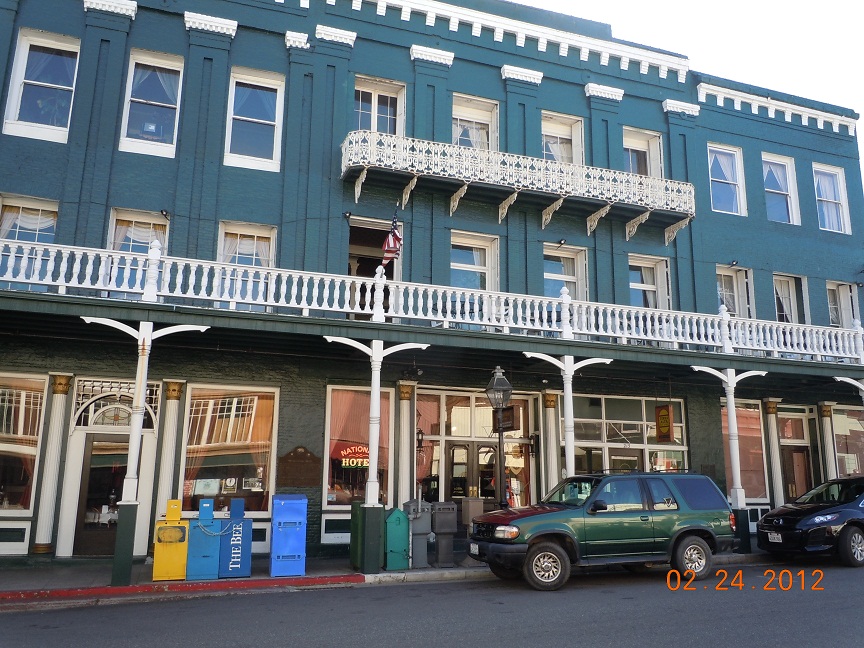
Western Trips visited Nevada City California, one of the more famous of old California gold mining towns, to learn more about hydraulic mining for gold. Located in the beautiful Sierra Nevada mountains, Nevada City is home to many historic sites and one of those is the Miners Foundry built way back in 1856.

Nevada City California is one of the best towns in the Sierra's to experience the California gold mining era. The town has done a superb job in keeping and restoring some of the more famous gold era historic sites such as the National Hotel, the Nevada Theater and the Miners Foundry just to name a few.

national hotel in nevada city
National Hotel
Getting to the Gold

There were several ways of finding gold in old California. Placer mining, tunneling and hydraulic mining were among those. Placer mining was the first stage. This was what the first of the Forty Niner's did to find gold. Placer mining is basically surface mining. Placer gold was the easiest gold to find. The problem was that at some point the easy diggings would play out and another method would be required. This is where hydraulic mining comes in and it had it's heyday in the early 1860's. What is hydraulic mining?

The best description of the effects of hydraulic gold mining can be found in the book Anybody's Gold by author Joseph Henry Jackson. Jackson describes the effects of hydraulic mining as a wholesale change of the landscape. This type of mining actually tore down mountains and filled the rivers with red mud. It was essentially an extension of placer mining except it was on a grand scale and made permanent changes to the topography which was very visible to the naked eye.

water cannon from the gold rush
Water Cannon display at Nevada City California
Hydraulic mining washed away entire hillsides. As more water became available, new and larger nozzles were developed which led to the California's  "Monitor". This was a giant nozzle, braced on a rig, that had so much pressure it was said that it could tear the side of a mountain away in a few minutes. It was a water cannon. The water was compressed into a nozzle that was from one inch to eight inches in diameter. In one of the volumes of his History of California, historian Hubert Howe Bancroft described that an eight-inch Monitor could throw 185,000 cubic feet of water in an hour with a velocity of 150 feet per second. This was an incredible force. There's another story out there that says that a man could not swing a crow bar through a six inch stream from the Monitor. Obviously an enormous amount of water was used and on top of that the hydraulic mines operated twenty-four hours a day being lit at night with bright lights or even locomotive lights.

One effect of hydraulic mining on such a large scale was that the tons of sediment put into the rivers caused them to widen and change channels. Floods occurred in the Sacramento Valley. This filling of the rivers with red mud also interfered with steamboat traffic between Sacramento and Marysville.

gold rush hydraulic mining
21- inch Gate Valve to control water flow from 1880
While handsome profits were being realized by the mining operators, the process was at the expense of the populace and regulations had to be enacted. Although it was well understood that the hydraulic mine operators contributed millions of dollars into the state tax receipts, hydraulic mining in California was virtually forbidden by 1884 per a decision from the U.S. District Court in San Francisco. This was about thirty years after it all began. This was a direct result of widespread popular protests of which farmers who experienced floods were a big part.

The Pelton Wheel

Hydraulic mining of course required water and this led to other possibilities. Generally, water was brought down from the higher elevations and channeled through a hose.

pelton wheel in nevada city california
Pelton Wheel exhibit at Miners Foundry

An invention that really is the father of hydro power is the Pelton Wheel. The Pelton Wheel is named after it's creator, Lester Allan Pelton in the 1870's.  The Pelton Wheel shown in this article is an exhibit at the Miners Foundry in Nevada City California. The wheel is an impulse turbine. It's purpose is to generate power from flowing water. The momentum of the water flow turns the turbine. Very large Pelton Wheels, sometimes referred to as water wheels, are used today in our hydroelectric energy plants and today's operations are a direct result of the first Pelton Wheel.

Four additional articles from Western Trips you'll find interesting are the gold mining towns of Grass Valley California and Auburn California. Also, Breckenridge Colorado / Mining and a Year Round Resort and   They Called It Hangtown For Good Reason 

Nevada City California is located 60 miles northeast of Sacramento on Hwy 49. This is about 28 miles north of Auburn California which is on Interstate 80. Traveling from Reno Nevada, take Interstate 80 to the CA Hwy 20 exit which is about 58 miles west of Reno. Nevada City is about 26 miles west on CA Hwy 20. If you want to learn about finding gold the way the miners did with hydraulic mining, Nevada City California and the Miners Foundry is a good addition to your Sierra Nevada trip planner.

(Pelton Wheel photo is in the public domain. Remaining photos are from author's private collection)

Wednesday, July 11, 2012

Uranium Mining / Grants New Mexico

The funny thing about uranium is that when first discovered, it wasn't considered a valuable or useful ore. Officially, the mineral was discovered in 1789 although miners had been aware of it for many years, even centuries. The ore is heavy and because of that at one time it was even used as a door stop. It would be many years later that this ore and uranium mining would become valuable for the construction of nuclear weapons and also for providing fuel for power generation.

new mexico mining museum
New Mexico Mining Museum
In the U.S., the first uranium was discovered in 1879 in Colorado. According to the New Mexico Mining Museum, uranium is more abundant than gold or silver and is about as common as tin. Another interesting fact put forward by the New Mexico Mining Museum is that spent fuel from nuclear power plants can be reprocessed to provide about 50 percent more energy. It's also a fact that Madame Curie used uranium from the Colorado plateau uranium mines for her radium experiments during the late 1800's. While much of the deposits of uranium are spread thin, there are several places where it's much more concentrated thus making it economically feasible to mine for. Unlike many other ores, uranium is radioactive and this makes it's detection that much easier with the use of electronic detectors. Prior to World War Two, the ore was used for it's radium. A variety of uses for the radium included the manufacture of  watch dials and in several types of instruments. Radium is luminescent due to it's instability and it's also radioactive. The prewar years was during a time when the potentially harmful radiation effects of the mineral were not fully understood.


Today, most of the uranium being used by our reactors in the U.S. is being imported from Canada and Australia. There is very little production coming from U.S. uranium mines. It all started for New Mexico when a Navajo sheepherder in 1950 discovered uranium about fifteen miles northwest of Grants New Mexico. This discovery involved surface uranium and simply happened by chance. Grants is located along Interstate 40 about 77 miles west of Albuquerque. In addition to the spectacular scenery in this part of New Mexico, Grants is also the location of the very interesting New Mexico Mining Museum. If your western road trip takes you through New Mexico, particularly along Interstate 40, you will enjoy a fun and educational visit to this museum which will allow you explore in their underground mine shaft. Many authentic artifacts are on display such as the tools used by the miners including safety and detection equipment as well as an audio/video presentation. There's also an excellent exhibit in the mine shaft explaining how explosive charges were used.

gamma analyzer for uranium mining
Gamma Analyzer on display at NM Mining Museum
The city of Grants itself went through many phases of commerce. First as a railroad camp during the 1880's and then as an agricultural area due to the rich volcanic soils and then as a burgeoning uranium mining center. The uranium mining boom started in the 1950's and lasted all the way into the 1980's. The uranium belt in the Grants area is about 100 miles long and as much as 20 miles wide running in a southeast to northwest direction towards the Four Corners area. Although uranium mining has ceased in New Mexico, the uranium deposits are still considered large. The large price drop in uranium, mostly because of high grade foreign production, caused the U.S. uranium production to decline. It was reported that by the year 2001, there were only three uranium mines operating in the United States.

There is also a health risk associated with uranium mining which was recognized early on. In 1962, the federal government published a study which connected cancer with uranium mining. In 1969 the government set amounts of radon that miners could be legally exposed to. In 1990, the U.S. Congress passed the Radiation Exposure Compensation Act which offered compensation to miners adversely affected by mining. According to the Scientific American, the U.S. Environmental Protection Agency as of the end of 2010 is involved in an effort to assess 520 open abandoned uranium mines all over the vast Navajo Reservation in the American southwest. Many people believe that the number of mines is twice that figure. The main exposure of Navajo Nation people is their exposure to uranium through airborne dust and contaminated water for drinking.

underground uranium mining
Display showing blasting holes in underground shaft
The Manhatten Project was launched after scientist Albert Einstein convinced President Franklin Roosevelt that Nazi Germany was active in trying to purify Uranium-235 for atomic weapons. The U.S. program started shortly thereafter and ended up with a total cost of some $2 billion, an enormous amount in 1940 dollars. Ironically, while the Manhatten Project was working feverishly in Los Alamos New Mexico during World War Two, most of it's supply of uranium for experiments actually came from the Belgian Congo and some from Canadian uranium mines. The discovery outside Grants, some 140 miles southwest of Los Alamos, didn't occur until five years after the war. The discovery in New Mexico of large deposits ushered in a thirty year mining boom.

Two additional related articles you'll find interesting are the Turquoise Mines of Cerrillos New Mexico and the Los Alamos Museum.

If you haven't visited this unique museum, it is well worth the stop and it's a great side trip for the entire family. The New Mexico Mining Museum is located at 100 North Iron Avenue in Grants New Mexico.

(Photos are from author's private collection)
View Larger Map

Friday, May 4, 2012

Madrid New Mexico / Turquoise Trail

shops in madrid new mexico
Shops line the streets in Madrid, NM
A Western road trip into New Mexico takes us to the very scenic Turquoise Trail. The beautiful Turquoise Trail is a National Scenic Byway from Albuquerque to Santa Fe. Along the Turquoise Trail is the town of Madrid.  

Madrid New Mexico has a history dating back to the 1800's and had everything to do with coal mining. This wasn't any coal mining area. Madrid  had the distinction of being one of only three areas of the world where mining of both soft and hard coal could be accomplished. Soft coal by definition is a bituminous coal that burns readily with a yellow flame. Soft coal was in demand for a growing nation and it's railroads.

 Mine shafts at Madrid could go some 2,500 feet under ground. Under ground mining is an expensive proposition. Coal mining was great for the local economy because there was large need very nearby. The consumers were the Atchison Topeka & Santa Fe Railroad, the U.S. government and of course the local towns.

Madrid New Mexico went from a booming coal mining town to a ghost town and now to an art and culture destination. Today, Madrid is a booming tourist attraction on NM Rte 14. Starting in the 1970's artists and craftspeople arrived and today you'll find many fine galleries, shops, restaurants and museums. Madrid is an absolutely delightful destination. Regular art and entertainment events are scheduled in Madrid that brings people there from all over the country.

The first Europeans in this region of New Mexico were the Spaniards. Santa Fe, just about 15 miles to the north was officially established in 1610. At that time the area of Madrid and the Turquoise Trail were largely inhabited by Indians.

Valuable Turquoise Deposits
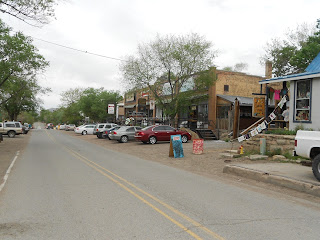
route 14 in new mexico
NM Rte 14 through Madrid, New Mexico
There were large deposits of turquoise in this area and the Native Americans residing there mined the turquoise for jewelry making. New Mexico turquoise was used in a variety of jewelry and garments and is still in demand.

The population in this area just to the northeast of the Sandia Mountains remained sparse however some farming was taking place.

Coal Becomes King

 It wasn't until a century or two later that the entire area on the Turquoise Trail and Madrid in particular would take off. Coal mining became THE industry in Madrid starting around 1835. This would have been during the short span of Mexican rule which lasted from about 1821 to 1846. If the massive coal deposits weren't enough to put Madrid New Mexico (at the time Nuevo Mexico) on the map, placer gold deposits were found there in about 1840.

Madrid reached it's high point starting in the 1880's. Just as in the case of other mining towns spread all over the west, Madrid New Mexico, because of it's underground mining industry, had one of the largest populations in New Mexico. For another example, there was a time when Virginia City Nevada was the largest town in the territory. In the 1890's Madrid claimed more than 3,000 residents making it a larger town than Albuquerque. The Atchison Topeka & Santa Fe Railroad was a good customer for the towns coal production and even built a spur line down to Madrid from it's main line.

Twentieth Century Coal Mining

at&sf steam locomotive
AT & SF Railroad steam locomotive
Beginning in the first decade of the 20th century, Madrid was essentially an owned and operated coal mining town of the Albuquerque and Cerrillos Coal Company.

The photo left is of an old Atchison Topeka & Santa Fe Railroad 2-8-0 configuration steam locomotive used in Madrid. This particular steam locomotive was built in the year 1900 by the Richmond Locomotive Works.

This old steam engine is on display at the Old Coal Mine Museum in Madrid. The Atchison Topeka & Santa Fe was vital in the growth of New Mexico during the late 1800's and early 1900's.

The coal company provided everything it's employees would need to live and work in Madrid. Churches, shops, auto garages and even a jail. Eventually the Albuquerque and Cerrillos company was bought by one of it's employees, Oscar Huber. Huber started working for the mining company in 1910 and became general supervisor. Interestingly enough, when Huber joined the company there was electricity available. It was generated by a company owned powerhouse but was used only by the company.

If you had a home in Madrid, you used candles or oil and gas lights. By about 1915, after Huber had acquired the coal company, electricity was available for residential use. The electricity use in Madrid in 1915 was still pretty unique for a remote town. As an example, parts of the Texas Hill Country west of Austin was without electricity until the year 1938, some 23 years after the coal town of Madrid. The Hill Country was filled with ranches and farms and running electric lines there was considered too expensive, thus the delay. In the case of Madrid New Mexico, the booming coal industry made it economically feasible to generate electricity. They had their own powerhouse. As for it's use by residents, it would take Oscar Huber's ownership to make electricity available.

Oscar Huber Builds Madrid

Huber did much more than provide electricity. He is credited with paving Madrid's streets and building a six room hospital. Huber also built homes on vacant lots. Madrid's stature in New Mexico was enhanced when, during the 1920's and 1930's, the town became famous for it's Christmas lights display. People would come from all over New Mexico to see the lights.

Beginning in the 1920's, the town miners lit up the town at Christmas time with some 150,000 lights. This was made possible in part by the coal company's coal fed electric generators. The electricity and the coal were there so the miners used their resources to make the company town of Madrid a Christmas destination.

Change Comes

steam locomotive interior
Engineer's controls on the AT & SF steam locomotive
Madrid and it's mines stayed busy. It wasn't until World War Two when things began to change.

 Manpower was a short supply with the U.S. military taking many of the miners. There was also a move to different power sources than coal, such as gas and diesel. The coal consumption dwindled for years until by 1954 there was almost nobody left in Madrid.

The town was actually put on the selling block with an asking price of $250,000. There were no takers. The old company town, now a ghost town, was eventually owned by Joe Huber, the son of the Albuquerque and Cerrillos supervisor and later owner of the company. Madrid stayed a ghost town for many years. It wouldn't be until the 1970's that new life and new interest came to Madrid.

The New madrid New Mexico

In the 1970's, the first arrivals were hippies looking for a place to stay. Huber rented out some of the structures to the new arrivals and things pretty much grew from there.

Artists and craftsmen emigrated to the area where they would eventually set up galleries. The tourism industry started to grow and with it so did Madrid. Being located between the tourist destination of Santa Fe and the states largest city, Albuquerque, didn't hurt. Also being located in the heart of northern New Mexico's art region is a big plus. Today the Turquoise Trail is a favorite route for many driving between the two cities. The approximately 300 people who call Madrid home today have even reintroduced the Christmas lights display that the town had been much noted for during it's glory years.

Two articles on additional travel stops in northern New Mexico are Bandelier National Monument northwest of Santa Fe near Los Alamos and the Oldest Church in the U.S. in Santa Fe.

If you're planning a New Mexico road trip vacation, a drive on the scenic Turquoise Trail between Albuquerque and Santa Fe is a lot of fun with great photo opportunities.

(Article and photos copyright Western Trips)


View Larger Map

Thursday, March 29, 2012

Nevada City California / A Western Road Trip to the Sierra Nevada's

When your California vacation includes an exploration of the historic gold mining towns along California's Highway 49, Nevada City is a stop you surely want to add to your trip planner. Nevada City California has long been a popular tourist destination for a variety of reasons.

One is that the town is tucked into the scenic Sierra Nevada Mountains not far north of both Auburn and Grass Valley, two other great gold mining tour stops. Another is the rich history you can experience. Nevada City CA history includes both the large mining operations which was the first reason for it's existence and also the colorful characters who inhabited the town during it's heydays.

Today's Nevada City

nevada city california
Nevada City California
Today, the entire downtown district of Nevada City is a National Historic Landmark.

 Just strolling through town is one of the fun things to do that are free. The entire downtown area of Nevada City California is like one large museum. Tourists enjoy quality restaurants, comfortable and quite unique lodgings and a variety of fine shops, boutiques, galleries and museums. While you can tour Nevada City in one day, you'll have no trouble finding enough great historic sites to make your stay a multi-day excursion.

Nevada City in many respects was like other gold rush towns. It had it's customary three dozen bars, it's gambling houses and it's theaters. Like most of the other gold towns, Nevada City merely started out as a camp and as it's mining fortunes grew, so did the camp. Eventually, the camp became a town. The city today has a population of about 3,000. In 1850, just one year after it's settlement, there were 10,000 people living there. In fact, in the general election of 1856 there were 2,082 ballots cast in Nevada City. This was exceeded in the state of California only by Sacramento and San Francisco. The town was incorporated in 1856 and the word "City" was added to it's name. This helped differentiate it from the nearby Territory of Nevada.

nevada theater
Nevada Theatre
The Nevada Theater

One interesting historic site while touring Nevada City, and there are many, is the old Nevada Theatre.

The Nevada Theatre, established in 1865, is California’s oldest original-use theater. It is still in use today. It's history of performances tell a lot about just how old this theater building is. Over it's nearly 150 years, the Nevada Theatre hosted performances by Mark Twain to Motley Crue and the Second City comedy troupe.

In the old days, in addition to Mark Twain who spent a great deal of time in the gold country, noted performers included Edwin Booth, older brother of John Wilkes booth. It was in Nevada City that Edwin Booth first acted the role of Iago, the villain of Shakespeare’s tragedy “Othello.” For years to come, Booth was recognized as the foremost tragedian of the American stage. Another very notable actress of the 1800's who performed at the Nevada Theatre was Lotta Crabtree from nearby Grass Valley. Lotta went on to become the first entertainer millionaire. Yet, another performer who was seen on the stage in Nevada City was Jack London who resided in the north San Francisco Bay area.

Firehouse Museum

nevada city california fire house
Nevada City Firehouse No. 1
While exploring Nevada City you will want to add a stop at the old Firehouse No. 1 Museum.

This firehouse was built in 1861 and it housed the Nevada Hose Co. No. 1 from 1861 all the way to 1938. Everything from horse drawn wagons to modern fire engines rolled out of this fire house. The fire house is located at 215 Main Street. The Nevada County Historical Society established this building as its first museum, the Firehouse No. 1, in 1947.

The National Hotel

The National Hotel is listed on the National Register of Historic Places. Out of all the old hotels in Nevada City, the National Hotel is the most historic.

Prior to being named the National Hotel, the structure opened in August of 1856 under the name of "Bicknell Block". The Bicknell Block housed just about everything of major importance during the early days. The stagecoach stop, post office and telegraph office. This hotel is considered one of the oldest hotels west of the Rocky Mountains that has been in continuous operation. When you step inside it's like a trip back to the Victorian era. The hotel is the site of California Historic Landmark No. 899 and is the most noted of the old hotels in the California gold country.

national hotel nevada city
National Hotel, Nevada City
When you tour Nevada City make certain to walk inside the National Hotel. You'll see Victorian era furnishings and decor throughout. Wall coverings and carpeting as well as numerous artifacts give the National Hotel the look of a Victorian museum.

As you can imagine, the National Hotel is still very popular as a place to stay with visitors to Nevada City. The National Hotel offers comfortable lodging in an old-fashioned setting. The hotel includes forty-two rooms and a Victorian dining room. The location is right in the heart of downtown Nevada City.

Being such a historic city as it is, Nevada City California is filled with historic buildings. Another pictured here is the Kidd-Knox Building, shown below. The first structure was built in 1850. It was a two story frame building. It originally housed a theater and a reading room on the second floor. That structure was destroyed in the great fire of 1856 and was replaced with a two story brick building.

Fires ravaged several gold mining era towns. The first structures built throughout the California gold region were built from wood. Effective fire fighting equipment was absent during the towns very first years and when fire destroyed much of Nevada City and other nearby towns, brick became the building material of choice. Today, you see many of these original brick buildings still standing.

Two additional related Western Trips articles are about the Grass Valley California gold mining town and the story of Sutters Fort in Sacramento.

Visiting Nevada City California

kidd knox building nevada city california
Kidd-Knox Building
Many people today travel to Nevada City  for weekend getaways.

Unique bed and breakfast inns, wine tasting rooms, art galleries and world class restaurants are among the attractions. Because of Nevada City's elevation in the Sierra Nevada, fall colors abound with the cooler temperatures and this is another reason why a fall weekend trip to gold country is a lot of fun.

One of the things that visitors to the California gold country soon realize is all of the fun things to do that are free. Nevada City California is one of a string of old California gold mining towns that bring history to life. Nevada City CA is located about 65 miles northeast of Sacramento. The drive is about one hour and twenty minutes.

California Route 49 and Route 20 offer a scenic detour to Interstate 80 while driving between Reno Nevada and Sacramento California. The driving route can be accessed from the west at Auburn California which is directly on Interstate 80.

Accessing this route from the east, look for either the Yuba Pass or Emigrant Gap exits high up in the Sierras. Driving distance from Emigrant Gap to Nevada City is about 32 miles and takes about forty minutes to drive. If time allows, this detour is great fun and takes you through very scenic Sierra Nevada country as well as through the old gold mining towns of  Nevada City and Grass Valley California. It's a scenic alternate route well worth the extra time.

(Article and photos copyright Western Trips)

Sunday, March 18, 2012

Sutters Fort / Things To Do in Sacramento California

sutters fort gate
One of the gates at Sutters Fort
A low cost and quite fun stop during your California vacation is Sutters Fort in Sacramento. It's one of the things to do in Sacramento California and it's filled with Sacramento history. Outside of beautiful Monterey where the Spanish ruled Alta California, Sacramento and Sutters Fort was ground zero for the American occupation after the Mexican American War. Sutters Fort was the fortification built by John Sutter, a Swiss immigrant, in 1839. It was the very first non Indian structure built in central California. Sutter originally had  received an eleven league land grant from the ruling Mexican government. Much more land was eventually added to that amount. John Sutter named his California land holdings "New Helvetia". Today, Sutters Fort is a California State Historic Park and serves as an Indian museum. This structure really was the very start of the City of Sacramento.  The fort represents the history of California and Sacramento at a time of major change.

The building of the fort made a lot of sense. It was constructed on a rise near the river and provided some protection from hostile Indians. Not all were hostile, but a certain number were. Also, Sutters Fort became somewhat of a town center. It consolidated many of Sutter's enterprises such as a granaries, a blacksmith shop, store rooms and of course an arsenal.

Touring the fort today, one can stroll around and see these various enterprises within the fort walls as working exhibits of history. Exhibits and demonstrations are held on subjects such as fur trapping, sewing and mending and the art of blacksmithing. This California State Park is probably the most interactive of all State Parks and this helps make a visit there even more fun. Out of all the parks in Sacramento California, this is a must stop. Sutter's Fort Trade Store is operated by the Friends of Sutter's Fort in cooperation with California State Parks. All proceeds fund the educational programs at Sutter's Fort State Historic Park. The Trade Store is located within the fort. A lot of very interesting and educational items can be found there including books, earthenware and art. Fort Sutter schedules many special events and exhibits during the year and quite a few of them are interactive.

sutters fort building
Storehouse within Sutters Fort
Thanks to some forward thinking individuals under the name of The Native Sons of the Golden West, the restoration of Sutters Fort began in 1891 and was completed in 1893.  The fort was donated to the State of California and Sutter's Fort became a part of the California State Park System in 1947. Sutter's Fort stands today as the oldest restored Fort in the United States. 

Sutters Fort was also a meeting place of sorts. It was the destination used by immigrants traveling over the Sierra Nevada Mountains, stagecoaches and for a brief time the Pony Express. Sutters Fort was both a working settlement and a major landmark. Sutters Fort would also be the place that rescue parties departed from to try to save the stranded Donner party during the harsh winter of 1846-47. In the book, Anybodys Gold by author Joseph Henry Jackson, the fort was a citadel for Sutter that focused everything. It was his home and office and the place where he sat being the friend and patron of all the valley. here he had furniture purchased from the Russians at Fort Ross, a fireplace, a small table, pens and paper and a candelabrum which furnished light. He also had Indian blankets woven on the forts own looms.

boiling pot at sutters fort
Sutters Fort boiling pot
John Sutter came to California many years before the Gold Rush appeared. His background and interests were in farming, not mining. The land Sutter acquired through grants and other arrangements was cultivated and built into producing farm land. When gold was first discovered in California at a sawmill owned by Sutter, everything in his world changed. I think that most people are familiar with what occurred next and when the thousands of gold prospectors reached the Sierra Nevada foothills, it was more a disruption for John Sutter than anything else.

The latter 1840's was a time of great turbulence in northern California. Two big events occurred and they happened at about the same time. First was the gold discovery mentioned above and then it was the end of the Mexican American War which ceded California to the United States. During the Mexican American War and the famous Bear Flag Revolt in 1846 at the start of the Mexican American War, which was an American uprising against Mexican rule which was a bit similar than what occurred in Texas in 1836. The revolt was As it turned out, the Bear Flag Revolt was really unnecessary since the United States took over California after the end of the Mexican American War. What is notable about the Bear Flag Revolt was that it was encouraged by U.S. Army Major John C. Fremont and amazingly also by former Mexican General Mariano Vallejo.

covered wagon at sutters fort california
Covered wagon exhibit on the fort grounds
In regards to the California Gold Rush and Sutter, even though he didn't want anything to disrupt his farming and lumbering operations, when the gold was discovered he and another man put it to the test. Sutter learned that it was, in fact, gold. While still not wanting it to disrupt his other pursuits he did take action to gain ownership and title to as much land near the discovery as he could. While trying to keep the gold find secret, which seems impossible to begin with, a newspaper published a story of the find and it wasn't long before everything that Sutter had built up until that point was overrun by gold seekers.

There are two other articles that tell more about the history of gold rush towns that you should find interesting. They are the story of Auburn California, just to the west of Sacramento in the Sierra Nevada foothills and also the story of the steamships that carried both men and mail to the California gold fields.

As mentioned, the gold rush really destroyed the holdings of John Sutter. He lost a good deal of the land he had acquired during Mexican rule. To guard against possibly losing everything that remained he deeded his land to his son. Sutters son apparently had little interest in what was going on with the gold mining and concentrated on building a town by the name of Sacramento.Although the father wanted the new town to be named Sutterville, the town of course was named Sacramento.

sutters fort sign The elder Sutter tried to petition the federal government for some type of restitution. Congress was debating a bill that would have given Sutter some $50,000 but nothing had been passed and he died in a Washington D.C. hotel in June of 1880. His body was transported back to his native Switzerland where he was buried in his hometown of Lititz.

What's both amazing and at the same time a tragedy was that the dreams of John Sutter and his "New Helvetia" were derailed by what was to many a financial bonanza like never seen before. Just about at the time that Sutter had built up his empire, the end of the Mexican American War would change the California power structure and the Great California Gold Rush would ignite on his land and bring about drastic changes he had no way to control.


If you have the opportunity to plan a California vacation, I believe you would have a great time exploring Sutters Fort and reliving the era of the 1840's, Mexican rule and California statehood. It's an excellent low cost, educational and fun opportunity for the entire family. Other great nearby trip stops are Old Sacramento on the banks of the Sacramento River and the California State Railroad Museum which is in Old Town. The Sacramento train museum is one of the areas top tourist attractions and one of the very best train museums in the United States. (Photos are from author's private collection)


Friday, September 30, 2011

Madame Moustache


Nevada City California sits high in the Sierra Nevada mountains east of Auburn and Grass Valley California. It's a beautiful old California mining town with lots of history attached. In fact, it's one of the most scenic gold mining towns of the old west.

There are two main ways to get there. If you're traveling westbound on Interstate-80 over Donner Pass you would exit at State Hwy 20 near Emigrant Gap and continue westbound about 35 miles along a winding but absolutely picturesque road. Traveling from the Sacramento area you would exit Interstate-80 in Auburn and travel eastbound on State Hwy 20 through Grass Valley and then about another five miles further to the east/northeast. The photo below is downtown Nevada City, 2011.

The Characters of a Gold Mining Camp

Courtesy Travis Thurston,Wikipedia
Like every old mining town whether in California or elsewhere it had it's many stories and colorful characters. Nevada City was no exception. The following story offers a lot of insight as to how mining camps were set up as well as a good look at the types of people who resided there. There were colorful characters indeed. In the high flying years of 1854-55, during the California Gold Rush, there was a female gambler whose establishment gained great notoriety with area miners. Her particular game was called "vingt-et-un". In case you're not familiar with this game, it's the casino game we now refer to as "blackjack" or "21".
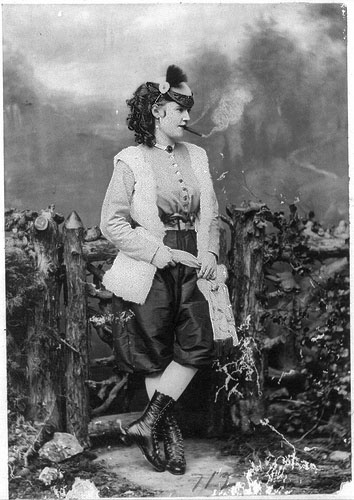
Eleanor Dumont


This woman by the name of Eleanor Dumont came virtually from nowhere. Prior to her arriving in Nevada City in 1854 nobody had heard of her. When the twenty-five year old Eleanor arrived on the stage from Sacramento it didn't take long for all that to change. The arrival of a woman in a mining town during those years was not really uncommon. Wives or fiances of miners, schoolteachers, even dance hall girls was not out of the ordinary. Eleanor Dumont didn't fit into any of these. From the moment she exited the stagecoach she stood out. After letting everyone know she was French she essentially spent her first week in Nevada City in her hotel room or sitting in the ladies parlor.

The Best Dressed Gamblers Anywhere

Eleanor's real intent of traveling to booming Nevada City didn't take too long to reveal itself. After about one week in Nevada City Eleanor set up a gambling house. She ran one table and she was THE dealer. The game of course was "blackjack". The grand opening featured free champagne. Reports are that the dusty miners washed up, put on their best clothes and boots to attend Eleanor's grand opening.

Now to the miners walking around with their gold dust a gambling hall was nothing out of the ordinary. What was out of the ordinary was having a woman as the owner not to mention blackjack dealer. These miners by all means were the best dressed gamblers of any gold camp gambling hall in all the west. Eleanor treated the awed miners with respect and gladly paid out if they won and even more gladly accepted their gold when they lost which was more the case. Believe it or not some miners had no problem losing their gold to a lady gambler. At least that's the way they said it was in Nevada City. There are no reports of how much was Eleanor's take on gala grand opening night but local lore is that everyone agreed she did very well.


Nevada City National Hotel Today


Eleanor, who picked up the nickname Madame Mustache because of the thin hair above her upper lip, worked Nevada City just as she had planned.  She arrived to take advantage of the town at it's peak in gold production and when the placer and dry diggings started to wane it was time to move on. In 1856 Eleanor moved on.

During the next twenty years the story of Madame Mustache is a bit sketchy. One problem was that the mining towns she moved to were a bit different from Nevada City. Nevada City was the county seat and the town was quite organized for the era and the location.

Other towns that Eleanor set up gambling houses had a rougher sort of clientele. These people weren't happy losing their money regardless of the gender of the recipient. The name Madame Mustache followed her wherever she went which including other mining camps in California and Nevada. History reports that Eleanor traveled to Idaho and the Union Pacific Railroad construction camps in Wyoming. There are also tales that she traveled to the Black Hills and Deadwood South Dakota. Another report said she also visited mining camps in British Columbia.

Wherever there were men and money to gamble Eleanor tried to be present. There are stories that floated around that Eleanor, years after leaving Nevada City didn't just confine her business activities to gambling but may have also operated bordello's. Whatever the truth is, Eleanor had the ability to find out where the easy money was and made sure she got a piece of it.

The End in Bodie

Eleanor's end came suddenly in 1879  in the eastern California mining camp of Bodie California. On September 9, 1879, the Sacramento Union newspaper reported in only three lines..."A woman named Eleanor Dumont was found dead to-day about one mile out of town, having committed suicide. She was well known throughout the mining camps". The local town folk buried Eleanor and it would be a year later that her obituary appeared in the official History of Nevada City, California.  Such was the story of Eleanor Dumont, Madame Mustache. You could say that she was the most mysterious single woman of the California gold mining towns.


Nevada City is one of the best old mining towns to visit while in California's Sierra Nevada foothills. The other one I would recommend visiting and not too far from Nevada City is Virginia  City Nevada and the Comstock Lode. Nevada City has ninety-three buildings that are listed on the National Register of Historic Places. One interesting historic site is the National Hotel which still operates to this very day. The forty-three room National Hotel, established in 1852,  is said to be the oldest continuously operating hotel west of the Rockies. That alone is worth a stop and photos. You'll find the National Hotel as one of the best restored buildings and hotels in Nevada City.  If you travel there in the summer months you'll find the weather in Nevada City very mild due to it's elevation.

Lotta Crabtree, 1868
Another must stop is the old Nevada Theater. Located in the center of town, the theater is California's oldest existing theater. Silent films were screened at the theater as early as 1908. Performers who appeared at the theater included Lotta Crabtree (one of the early west's most famous actresses and entertainers) , Mark Twain and Jack London. If you're California road trip takes you further west down Hwy 20 then you'll pass through Auburn California which was also one of the most booming gold sites in the Sierra's.

Additional related short stories of interest are Sutters Fort and the Gold Rush and California's Most famous Stagecoach Driver.


You may also be interested in a short story about Jack London.

(Photos from public domain. National Hotel photo from author's collection)


Tuesday, August 16, 2011

California Mining / The Argonaut Disaster

Vacationing in northern California offers you the opportunity to visit some of the historic landmarks that comprised much of the California Gold Rush region. Jackson California, the county seat of Amador county was an active California mining center right into the 20th century. Where is Jackson California? It's located about 45 miles east of Stockton and Sacramento in the beautiful foothills of the Sierra Nevada Mountains at an elevation of between 1,200 and 1,600 feet. The foothills include the  picturesque old gold mining towns of Angels Camp, Murphys, Sonora and Sutters Fort. There are also great places to stay during your extended vacation or perhaps just a weekend getaway to explore California mining history. Great B and B's and some very unique restaurants. Amador County is an excellent addition for your trip to California.
(Downtown Jackson photo courtesy of Bobak Ha'Eri. Creative Commons 3.0)

The Argonaut Gold Mine
 

The Argonaut Gold Mine was discovered in Jackson California in 1850  back in the heyday of the California Gold Rush. The gold craze was on and miners and prospectors were flooding into the region by the thousands. Jackson was one of those many settlements that grew from a simple mining camp to a full fledged town in next to no time.

Working in the mine was popular for recently arrived immigrants. Jackson's growth however was a bit different than some other mining camps. A group of miners in Jackson determined that there was money to be made by selling supplies and mining tools to the prospectors passing through the camp heading to the gold fields further south. Their idea was correct and Jackson California became known as a good place to stock up on just about anything a miner would need.The California mining boom made towns out of small camps. This same type of ultra-rapid growth occurred with many mining strikes such as in Virginia City Nevada in later years.


California mining was on a roll and gold panning was popular but after the easy gold pickings dried up by the 1860's, Jackson's mines were engaged in hard rock mining. The easy method involved gold panning. That was where the prospector gathered river silt in a pan and through a method of swishing water through the silt often gold nuggets large and sometimes very small would be left in the pan. It was time consuming but proved successful particularly during the early years. Hard rock mining was something totally different. It involved digging and blasting underground tunnels. Not only was this very hard work but it was also very dangerous. As tunnels were bored underground, sturdy timber would have to be placed inside the tunnels to prevent the earth from caving back in. The passageways would have to be constantly shored up. Blasting more rock away was also inherently dangerous and certain precautions would have to be in place before any detonation. In hard rock mining there would be drifts (levels) created from the main shaft that would be dug following veins of ore. Often horizontal shafts would also be dug between the drifts so that workers could move from one drift to another.


The Argonaut's main shafts were tunneled horizontally making use of a tram on tracks to bring the ore to the surface. The work conditions were harsh in as much as the temperature would rise one degree for every 100 feet in depth. The miners were mostly European immigrants from Italy, Spain, Serbia and the Baltic countries. Like most immigrants of the day, much of their earnings were sent back to relatives in Europe to help pay for their eventual travel to America. Pay for this type of work was not terrific..about $4.00 per day nevertheless jobs in the mine were coveted.

There were procedures in place in many mines which were meant to stop the theft of ore by working miners. Basically the men had to strip naked in one room and redress in another room so that ore could not be hidden in clothing. Another California mining rule in place was that lunch pails were left above ground and then brought down to the miners at mealtime. After lunch the pails were collected and brought back above and reclaimed by the workers after their shift ended. It was thought that ore could be hidden in pails or in their false bottoms. This procedure was suppose to stop that. Generally 75 men worked 8 hour shifts and the mines operated 24 hours, 7 days per week.


Mining gold was lucrative for mine owners. The two largest mines in the Jackson California area were the Kennedy Mine and the Argonaut Mine. They were located about a mile outside town and as you can expect there was much competition between the two. The Argonaut Mine was owned by a group of absentee investors and was located a bit uphill from the Kennedy. The competition was intense. Conflicts erupted where one mine was accused of tunneling into the property of the other. This was not uncommon when you had operating mines in such close proximity.

The Disaster Unfolds


On Sunday evening August 27, 1922 one of the worst mining disasters in California history took place at the Argonaut Mine. On a very warm night some 47 miners were trapped almost one mile underground when a fire erupted. Toxic gas and smoke filled the mine. Probably the first knowledge the miners had that something was wrong was when they noticed that their lunch buckets hadn't been picked up. Rats were usually scurrying around the empty lunch buckets but on this Sunday night there were none. Another indication that something wasn't right. One of the miners called to the surface on the mine telephone and learned that there was a fire. They were also told that no plans were in place for a rescue so they needed to protect themselves. In other words they were on their own. They tried to move to the Muldoon shaft. The abandoned Muldoon mine was used as a ventilation shaft complete with a fan. The Muldoon shaft was also to serve as a second escape route which was mandated by state and federal mine regulations. The Muldoon shaft however was already contaminated with smoke and gas. The trapped men eventually did make it up to the 4,350 foot level and made a stand there. They built one bulkhead then another.


Argonaut Mine management then made a series of decisions that would prove to be controversial. The primary question was...do we put out the fire or rescue the miners? Would it be possible to bore a hole from the lower Kennedy Mine into one of the Argonaut's shafts? After much debate the decision was made to try put out the fire. On the morning of August 28th the public was informed of the fire and of the trapped men. The press including newsreel cameras flooded Jackson and the trapped miners families and friends converged on the mine to learn the latest news and hold vigil.


Finally a committee decided on a two pronged effort. While work was being done to put out the Argonaut fire another group began digging from the Kennedy Mine, whose management offered to help in any way, through to the Argonaut. The Argonaut was being flooded with water to fight the fire which was the universal method used. The fire was put out in about 2 1/2 days. The miners digging from the Kennedy were told that their rescue effort was probably going to take three weeks at those deep levels. These rescue miners finally did reach to Argonaut shaft but it did take them 21 days. When the rescue workers reached the 4,350 foot drift they could immediately tell that there were no survivors. Breaking through the bulkheads they found 46 dead bodies most naked because they removed their clothes due to the heat. They did find writing on the wall from one of the victims that indicated that they probably died from the gas and lack of oxygen. In some ways this brought a degree of comfort to the victim's families for it seemed to show that the end came quickly and their loved ones didn't suffer for long. One missing victim, the 47th miner, was not found among the others. Forty-seven caskets were interred on Friday September 22nd. One casket was empty and was in tribute to William Fessel the unaccounted for miner.


Pictured at left is the clock tower memorial erected to honor those victims of the 1922 disaster. As with all disasters of this sort an investigation was begun. While the mine owners were found to be guilty of ignoring some safety regulations, ignoring safety regulations was not unique to the Argonaut as the same was accused of many mining operations around the country such as with a coal mine in Ludlow Colorado which resulted in warfare. In the end nothing substantive resulted from the investigation. The exact cause was never determined. Some thought the I.W.W. union was involved. Others thought the fire may have resulted from the many legal fights between the Kennedy and Argonaut mines. The most likely story was that it resulted from a spark from the electrical wires in the mine which could have ignited supporting timbers.

Along with the clock tower memorial there are three sites in Jackson that are on the National Register of Historic Places. You will be very pleased by adding Jackson CA to your California trip planner. Another must stop if you already haven't experienced it is nearby Yosemite National Park. The story of John Muir and Yosemite may be of interest to you.

Map of Jackson California.