Western Trips

Showing posts with label Missouri. Show all posts

Wednesday, December 20, 2017

Visit St. Charles, Missouri / Historic Attractions

Historic St. Charles is the third oldest city in Missouri with a very rich past. Once named the "Williamsburg of the West" by Southern Living Magazine, St. Charles' Main Street is Missouri's first and largest historic district.

missouri attractionsLocated along the banks of the Missouri River and just about a thirty minute drive west of downtown St. Louis, historic St. Charles has been welcoming visitors since 1769 and was Missouri's first state capital.

Today, the city is much as it was many years ago and continues to welcome tourists who enjoy early American history.

Lewis & Clark 

The famous Lewis & Clark Expedition set out from St. Charles up the Missouri River and eventually reached the Pacific Ocean near today's Astoria, Oregon. This expedition which covered the period 1804-1806 is credited with opening the American West.


Lewis and Clark National Historic Trail is approximately 3,700 miles long, extending from Wood River, Illinois, to the mouth of the Columbia River, near present day Astoria, Oregon, following the historic outbound and inbound routes of the Lewis and Clark Expedition. The trail connects 11 states (Illinois, Missouri, Kansas, Iowa, Nebraska, South Dakota, North Dakota, Montana, Idaho, Washington, and Oregon) and many Tribal lands. The trail was established by Congress in 1978 as part of the national trails system (NTS) as one of four original national historic trails. One site for more information about traveling along the trail is....www.lewisandclarkcountry.org

Here's some of the great attractions in St. Charles...

lewis & clark center st charles
Lewis & Clark Boat House and Nature Center 

The Lewis & Clark Boat House and Nature Center is the Discovery Expedition's permanent home. Situated beside the Missouri River at Bishop's Landing in charming historic St. Charles, Missouri, the museum and educational facility features exhibits relating to the Lewis and Clark expedition, historic St. Charles, and the Missouri River ecosystem. When not on the river, the Discovery Expedition's hand-crafted replica boats will be on display on the building's lower level.These are full-size replicas of the keelboat and pirogues used by Lewis and Clark. Some interesting information about the original Lewis & Clark keelboat was that it was constructed in Pittsburgh, Pennsylvania, had a cannon purchased in St. Louis mounted on it's bow...was 55 feet long and 8 feet wide,T usually carried 27 men. he Lewis & Clark Boat House and Nature Center is a must stop and great fun for the entire family.

St. Charles Main Street 

Filled with unique shops, specialty shops, restaurants and historic structures, Main Street is St. Charles centerpiece.

st charles main street
St Charles Main Street
St. Charles Main Street National Historic District is the site of the first permanent European settlement on the Missouri River.With brick-lined streets, historic buildings and a heritage that spans two centuries, this charming Missouri River village has attracted travelers since the early 19th century.

St. Charles Main Street was a main shopping area for explorers and fur traders during the nineteenth century. Today, visitors to St. Charles, Missouri shop on the same street and in many of the same structures that were there in the early days. The items you will see for sale include teas; tobacco; books; artwork; fashion accessories; furniture; antiques; clothing; home decor; wine; hand-blown glass; fine jewelry; and stained glass as well as more items.

st charles historic buildings
First State Capital
Missouri's First State Capital Building 

The First Missouri State Capitol State Historic Site shown in this article is a state-owned property in St. Charles, Missouri that preserves the building that served as Missouri's capitol from 1821 to 1826. St. Louis had serves as the territorial capital. St. Charles was the first state capital until a capital in Jefferson City was built.

The meeting place for the state legislators was provided on the second floor of the brick building, owned by merchants, Charles and Ruluff Peck, and a craftsman named Chauncey Shepard. The floor was divided and used as Senate and House chambers, an office for the governor, and a small committee room.

More Western Trips articles you may enjoy are found on the links below...

Drive Kansas Route 66

Attractions in Independence, Missouri


lewis & clark statue

Lewis & Clark Sculpture

The 15-foot bronze monument features Meriwether Lewis and William Clark and Clark's Newfoundland dog, Seaman. The sculpture was dedicated on May 18, 2003 and marks the rendezvous site for Lewis and Clark before setting out from the last "civilized" stop of St. Charles to follow the Missouri River westward. The Lewis & Clark monument sits along the Missouri riverfront in Frontier Park.

Annual Attractions 

A few of the annual events put on in St. Charles, MO include the Lewis & Clark Rendezvous in May...the Blue Grass Festival and Civil War Reenactment in September and the St. Charles Christmas Traditions on Main Street in December.  For more information on annual festivals and events see...www.discoverstcharles.com/events/festivals/

(Article and photos copyright Western Trips)

Sunday, November 25, 2012

Conestoga Wagons


They looked graceful, they were called ships of inland commerce and they transported thousands of immigrants during the 1800's. The Conestoga Wagons played a very significant part in our nation's expansion. The Conestoga and then a hybrid of it was used by immigrants traversing the Overland Trail.

The Famous Conestoga

conestoga
Conestoga Wagon reenactment, 1961
The wagon's name denotes the region of Pennsylvania where they were first used in the early 1700's. The Conestoga Wagon was first used in the east carrying freight over the Allegheny Mountains. Later they and an offshoot of the Conestoga were used over the plains and the Rocky Mountains carrying settlers to California and Oregon. Traders on the old Santa Fe Trail liked the Conestoga wagon for both it's size and durability. The Santa Fe Trail was a heavy traveled freight route reaching from Missouri westward to Santa Fe. Often times the Conestoga wagons on the Santa Fe Trail pulled another wagon from behind.

The Construction of the Conestoga Wagon

The Conestoga wagon is often referred to as the "covered wagon". The covering which is the most distinctive trait on the Conestoga wagon was first made from hempen homespun and later of canvas.The wooden bottom of the wagon box was curved and rose at both ends. This design helped with the cargo while ascending and descending hills. The cargo would shift less easily and the tailgate would receive less strain. The wagon's wheels were usually rimed with iron to add to durability.

The wagon's average dimensions were 18 feet long, 11 feet high, and 4 feet wide. The wagon was pulled by horses or mules and was said to be able to carry about eight tons. The wagon might typically be pulled by up to eight horses or perhaps a dozen oxen or mules. Conestoga wagons were also known not to have drivers seats. The driver would generally walk alongside the wagon leading the front animal. The lead horse was usually the first on the left. There was often a braking system used which was generally a chain leading to the rear wheels. The chain could stop the wheel rotation causing a slide that would slow down the wagon.

prairie schooner photo
Prairie Schooner exhibit, Sutters Fort, Sacramento CA
The Conestoga Horse

The Conestoga Wagon actually had it's own breed of horse developed during the 18th and 19th centuries. These were the Conestoga Horses, bred to pull the typical heavy loads of the Conestoga's. The horses were first bred in Lancaster County Pennsylvania by Mennonite German settlers. This may certainly the only time in history that a special breed of horse was developed for one single commercial purpose. A Conestoga horse could be as large as seventeen hands. The breed is now extinct. The famous wagons lasted in the public's imagination much longer than the horses bred to pull them. The Conestoga horse today can only be seen in artwork from the era.

The Prairie Schooner

Essentially, the "prairie schooner" was a smaller Conestoga wagon. In modern day times it would be a small SUV as compared to a Chevy Suburban. The Conestoga's size alone made crossing the Rocky Mountains quite difficult. The size of the Conestoga killed oxen halfway through the trip west.

wagon train
1912 Pioneer reenactment
The immigrants were resourceful and came up with an alternative. The prairie schooner was basically a half size Conestoga. The prairie schooner was typically about four feet wide and ten to twelve feet long. This hybrid wagon weighed about 1300 pounds and could be easily disassembled. Everything the pioneer needed to cross rivers and certain mountain passes. The wagon bed usually was two to three feet deep. The front wheels were typically 44 inches in diameter and the rear wheels about 50 inches. The smaller front wheels allowed for sharper turns. Compared to the Conestoga wagon the prairie schooner had a relatively flat bottom.

The prairie schooner covering was often called the "bonnet". The covering was held securely to the wagon frame by hardwood bows. As far as springs were concerned, the prairie schooner usually had one set, under the drivers seat. The story is that the springs helped make the seat a bit more usable but by no means comfortable.

Probably one of the biggest misconceptions regarding the prairie schooner was that it was pulled by horses. In reality it was pulled by teams of oxen. Oxen were considered stronger than horses for heavy loads, endured longer, and their water needs were less. Something particularly important over the western desert region.

old west wind wagon
Old West Wind Wagon
It's also noted that some travelers on the Oregon and California Trails utilized wagons somewhat smaller than the prairie schooners. Some of these were simple ranch wagons with a covering. Although they served the purpose they were not nearly as sturdy as the prairie schooner and provided less shelter.

Three additional photo articles on Western Trips you'll find interesting are Oregon City Oregon, the official end of the Oregon Trail... Independence Missouri, the start of the Overland and Oregon Trail and Peppard's Wind Wagon, a way to travel westward by wind power alone. The photo left shows one variety of the Wind Wagon.

See the Conestoga Wagons and the Prairie Schooners

Among the select museums and historic sites where you can view the prairie schooners and the Conestoga wagons are the Virginia Museum of Transportation in Roanoke Virginia...Sutters Fort in Sacramento California...Fort Union in northeastern New Mexico about halfway between Las Vegas and Raton...The Conestoga Area Historical Society in Conestoga Pennsylvania...the Frontiers Trail Museum in Independence Missouri...The National Museum of American History in Washington D.C. and the North Carolina Transportation Museum in Spencer North Carolina.


OLD WEST COVERED WAGONS VIDEO


Wagon Train Reenactments

For those wishing to attend a real wagon train reenactment, check out the Highway 50 Association which conducts an annual wagon train, usually in June, between Nevada and California. The wagon train typically begins in the lake Tahoe area and travels westward into California. Their website is www.hwy50wagontrain.com

Two excellent reference books on frontier covered wagons are  Daily Life in a Covered Wagon by author Paul Erickson and Conestoga Wagons by Richard Ammon and Bill Farnsworth.

(Sutters Fort covered wagon photo from author's collection. Remaining photos from the public domain)

Friday, December 9, 2011

A Trip to Beautiful Branson Missouri

branson missouri riverfront
Branson Missouri riverfront area
Branson Missouri has become a premiere tourist destination for many families. Just listing all of the Branson attractions is a task. Many people travel to Branson because of the first class entertainment available.

You will find more than fifty live performance theaters, a whopping twelve championship golf courses, three beautiful lakes, an international award winning theme park, a very historic downtown district and an excursion train that will take you on a pleasant short trip into northern Arkansas and back.

A Big Tourist Destination

Branson, located in the scenic Ozark Mountains of southern Missouri, bills itself as a very affordable family vacation destination, and it truly is. There is something in Branson for the entire family. The town offers some 22,000 hotel rooms and a huge selection of restaurants that will fit any budget. It's estimated that Branson has some 7 million visitors per year. There are about 100 live shows and a total of 400 restaurants.

A family will find hotels in Branson Missouri to fit every vacation budget. You'll also find several Branson vacation packages to fit just about any trip length. You'll also want to check out the resorts in Branson Missouri, some of which offer cabins, marinas and boat rentals. Branson resorts also offer vacation packages.


For many years Branson was a popular destination for travelers from Missouri and other nearby states. A big change occurred with the establishing of music theaters by nationally known performers. These theaters found all along Highway 76 ( known as The Strip) greatly increased Branson's popularity and as a result Branson Missouri is a destination for tourists from all areas of the United States and the world. Branson shows are one it's main attractions.

The History of Branson Missouri

branson scenic railway
Train depot
Branson had it's beginnings in 1882 with the establishment of a general store. The town is named for Reuben Branson who not only opened the general store but also operated it as the local post office.

As far as Branson's entertainment start, you could say it began in 1894 with the Marble Cave. This was a natural cave explored in the 1880's and it was found to house quite a lot of marble. The cave was eventually purchased by a man named William Lynch and he opened it up to tourists. Lynch's tourist business did quite well. The town of Branson grew and was incorporated in 1912.


Branson and Show Business


The beginnings of Branson's show business connections can really be traced back to the year 1907. This was the year that author Harold bell Wright published the novel, "The Ozarks, The Shepherd of the Hills". The Old Mill Theater produced the first outdoor performance based on this novel in 1960.If you travel to Branson today you can still enjoy this production which still runs at the Old Mill Theater.


branson missouri train
Scenery on train ride
Branson's entertainment reputation continued when in 1962 the popular television series, The Beverly Hillbillies, used Branson as the home town of the fictional Clampett family.

The country star, Roy Clark, was instrumental in starting the celebrity theater venues which Branson is known for. Clark opened his theater in 1983 called the Roy Clark Celebrity Theatre. He was the first country celebrity to open his own theater and as time went on several country celebrities followed suit with their own theaters, many of which first appeared in Branson at Clark's venue. In 1987, Box Car Willie was the first  with a permanent schedule in Branson. In 1992, Andy Williams opened his Moon River Theatre.
In addition to this, Branson Missouri is now home to America's largest Veterans Day Celebration which is called Veteran's Homecoming Week.

Just to give you an idea of the celebrities who have passed through Branson Missouri over the years, they include...Johnny Cash, Wayne Newton, Rich Little, The Osmond Family, Charley Pride, Glen Campbell, Brenda Lee, Mickey Gilley, Gladys Knight, Lawrence Welk, Dick Clark and many many more. Branson is one of the biggest celebrity venues outside of Las Vegas Nevada.

Branson Scenic Railway

 branson missouri sunset
Branson sunset
During my visit to Branson I took the Branson Scenic Railway on it's very enjoyable one hour and 45 minute trip. The trip begins at the train depot in the center of town near the river.

The train travels through tunnels, over trestles, and through the southwest Missouri and northwest Arkansas wilderness. The Ozark Mountain foothills offer terrific picture taking opportunities. The train is made up of unique passenger cars. If you love trains then you'll love this fun rail excursion. The excursion is a forty mile round trip and snacks are available onboard.


 Plenty of Golf in Branson

 branson missouri golf course
Branson golf
Golf is another one of the popular things to do in Branson. If you're a golfer, your Branson vacation will offer a fine selection of golf courses for any skill level. I was able to play several during my trip there.

The Ozark Mountain topography lends itself well to championship golf courses. In addition to this, while winter does make it's way to Branson each year, the climate at Branson is mild most of the time. There are more than six major golf courses in Branson and three popular ones are Thousand Hills, Branson Creek and Pointe Royale.


Branson is located in extreme southern Missouri about 50 miles south of Springfield Missouri very near the Arkansas border. It's about 220 miles from Tulsa Oklahoma mostly via Interstate-44. About 200 miles from the Kansas City area and about 155 miles from Fort Smith Arkansas. If you're plans call for a Missouri vacation, Branson is a good companion trip to both historic Independence Missouri and  St. Joseph Missouri, the home and museum of the train and bank robber Jesse James.

Branson is a perfect family vacation destination and depending on where you happen to reside, it's one of the best weekend side trips you can find anywhere. Branson attractions offer something fun for every family member.

(Article and photos copyright Western Trips)


View Larger Map

Friday, October 7, 2011

Independence Missouri / The Old West's Starting Point

Independence Missouri is one of those towns that just happened to be located at a point which became the epicenter of American history. Founded in 1827, Independence is located on the south bank of the Missouri River at the furthest point west where steamboats could still navigate. This of course made Independence a jumping off point to the west and where much of it's history resides. Some of the history is 19th century and some 20th century. During the mid 19th century, if you were to try to identify a focal point for America's march westward, it would have to be Independence Missouri. While there are hundreds, even thousands of stories throughout the old west, many of them have some distant connection to Independence. The town served as a key stepping off point to those traversing the western frontier. A map of the Oregon Trail shows Independence as the eastern terminus.

See our article and photos of a visit to  Oregon City, Oregon, the western terminus of the Oregon Trail.

Another of our articles you'll enjoy is the Peppard Wind Wagon that crossed the prairie in the 1800's.


 Where the Pioneers Began Their Westward Journey

At the time of the American Civil War, Missouri was settled. The off and on Indian uprisings were to the west. Comanches down in Texas, Cheyennes, Sioux and other tribes further north. For years, settlers in their covered wagon headed west of the Missouri River into Kansas and over the route of the Oregon Trail. Independence was a major supply center for pioneers before they began their often 2,000 mile long trek. One very interesting fact is that Independence is the only city in the nation that served as the launching point for the Santa Fe, Oregon and California Trails. There are so many historic national heritage sites in Independence you can spend several days there. If your travels include a Missouri vacation, Independence is a must stop. Following are some great points of interest.
Courtesy Jackson County Hist. Soc.

The Jackson County Jail, built in 1859 with its barred windows, once housed Frank James, Jesse James’ notorious brother. Visitors are amazed to learn how James was treated like a hero and showered with gifts throughout his incarceration. Four feet away is the back wall of the federalist-style marshal’s house which was home for county marshals until the early 1930s. Special exhibits include a collection of confiscated handmade weapons. The old jail and museum is located at 217 N. Main St. in Independence and operated by the Jackson County Historical Society.

The Start of the Oregon Trail

Another fun and historic thing to do in Independence is ride a covered wagon. Rides are available at Independence Square. You can actually retrace some of the paths of the original settlers through wagon swales carved by the original pioneers. This wagon tour takes you 1800's style through Independence's famous historic district. The Independence Square is really filled with many historic sites since this was the location where the wagon train assembled before beginning the 2,000 mile journey westward over the Oregon Trail route. Among Oregon Trail facts is that the journey to Oregon could take six months or more to complete. A walking trip through the square itself is a walk back into history.

Harry Truman

Courtesy National. Parks
Another popular attraction in Independence relating to the 20th century is of course the Harry S. Truman National Historic Site. The Harry S. Truman House is shown at left. This stop during your Missouri vacation offers the Harry S. Truman Library and Museum, Truman Home and the little known Truman Courtroom and Office. They say that Harry Truman was Independence and Independence was Harry Truman. Many interesting exhibits and artifacts are on display. Harry S. Truman of course was the president who made the decision to drop the atomic bomb to end World War Two with Japan. On Independence Square you can also visit the drugstore where the former President held his first job. The sites relating to Harry S. Truman will really give you a good insight into the man from Missouri who became our President.

George C. Bingham

The Bingham-Waggoner Estate which was built in 1852 is another must see stop. Located at 313 W. Pacific Avenue in Indepandence, the estate was constructed along the 1846 alignment of the Santa Fe Trail. The home was once owned by George C. Bingham, the famed Civil War artist. In the 1890s the Waggoner's purchased the home and 95% of the furnishings are original to the home which is very unique. George Caleb Bingham stood out politically in Missouri. His political career included the writing of the failed “Bingham Resolution”, waging war on the activities of the Klu Klux Klan. Missouri had a very large Confederate sympathizer element and many of Bingham's activities ran counter to the southern beliefs of Missourians in his era. Many of Bingham's works as an artist centered around the serenity of pioneer life. Unfortunately, because of the Civil War in that particular part of Missouri, the Confederate killer and renegade William Quantrill raided towns and killed many with his infamous group named Quantrill's Raiders. With this sad and dangerous backdrop Bingham decided to sell his home. Waggoner took over the home in 1867. The Waggoner family had been millers in Pennsylvania and after moving to Independence became quite prominent in the baking flour industry. The Bingham-Waggoner estate is one of the best examples existing of early pioneer aristocracy. Another interesting attraction at the estate is the existence on the property of old wagon track swales from the time of the Santa Fe Trail.

The Railroad

Add to your Independence Missouri trip planner a visit to the old Chicago and Alton Railroad depot. Located at 318 W. Pacific Avenue in Independence, the depot was fully restored during the last decade of the 1900's and moved to it's current location. The two-story depot has three rooms on the first floor which are the waiting room, station master's room, and baggage room. The second floor has four rooms, which were formerly the station master's residence. This includes the kitchen, dining room, bedroom, and parlor. Each room is furnished in the period circa 1879. The depot also includes a room with many interesting Chicago and Alton Railroad artifacts.

Learning about the key role Independence Missouri and it's wagon trains played in our nation's westward expansion can be quite fun and educational. A good weekend getaway for the whole family. Whether your travels include a Missouri vacation or if you just happen to travel through the state on your road trip, a visit to Independence is a great addition to your trip planner.

(Article copyright Western Trips. Photos and images from the public domain)

Saturday, August 27, 2011

Jesse James And The Blue Cut Train Robbery

frank and jesse james
Jesse, Frank James 1872


The Last Train Robbery


It happened five years to the date of the failed Northfield Minnesota bank robbery which turned out to be the start of the decline of Jesse Woodson James and the James Gang.

This second event was the Blue Cut Train Robbery which occurred near Glendale Missouri on September 7, 1881. The robbery itself was not a big event as far as what was stolen. Reports were that this new James Gang stole something between $1,000 and $3,000 from the train's express car depending on which news report you believe along with personal items and money from it's passengers. Some historic reports claim that the money stolen was quite larger.

Regardless, reports were that Jesse thought there was quite a bit more money on the train than there actually was. No one was shot during the holdup. At the end of the robbery Jesse exclaimed to the express agent that the James gang would ruin the Chicago & Alton Railroad. The Blue Cut train robbery was nothing like the violent crimes in years prior involving Frank and Jesse James.  The gang wasn't the same. They weren't the violent pro-Confederate holdouts of the James-Younger days. The Younger brothers were in jail for the shootings in Northfield Minnesota and the law was after Jesse like never before. Blue Cut proved to be the second turning point in Jesse James criminal career.


The Northfield robbery attempt in September of 1876 went bad from the start and as a result the James gang was decimated. It just so happened that the local town folk in the farming community of Northfield were tipped off to what was occurring at the bank and didn't wish to lose their hard earned money to the gang. The gang members appearance at the bank seemed to stand out in this farming community. In other words they were conspicuous in this type of town. A large firefight ensued and the Younger brothers, major members of the gang, were captured and sentenced to long terms in Minnesota. Jesse and his brother Frank were not only on the run but their future as robbers was quite in doubt.

There was detailed reporting of crimes in the newspaper. The same is true today however the wording of the era was quite different from today. Following is an excerpt from the Sunday Times of Chicago on September 10, 1876, three days after the robbery..

" The robbers did not get into the vault, nor did they find the cashiers drawer, except the nickel drawer, and the handful of nickels taken from it was thrown to the floor. The citizens of Northfield behaved like old veterans, as many of them are. A. R. Manning and Hewey Wheeler and others were conspicuous for their conduct.
This is the most daring attempt at robbery that ever occurred in Minnesota; and we are very much inclined to the opinion that if the remainder of the gang are arrested they will go to meet their comrades in a great deal shorter time than the process of courts will give them".

It Wasn't the Same Old Gang


chicago and alton railroad route map
Chicago & Alton RR Route Map
Returning to the story of the Blue Cut robbery, over the years since the botched Northfield robbery Jesse was able to cobble together another group of followers, many of whom were also ex-confederate soldiers and/or sympathizers.

There were still many available even years after the American Civil War ended although many contend that this new group were simply petty thieves. The area of Missouri and Kansas was one of the more divisive parts of the country during the war. It was an easy area to recruit anti-establishment outlaws.

Being west of the Mississippi River and geographically between the north and the south there were people from all parts of the east who had migrated there. Union supporters and southern sympathizers were everywhere and the bitterness between them was legendary. One result of this bitterness was the raid on Lawrence Kansas in 1863 which resulted in the deaths of over 200 boys and men. The town was completely ransacked during the raid where 180 buildings were set ablaze and was was supposedly revenge for a raid earlier by Union supporters.

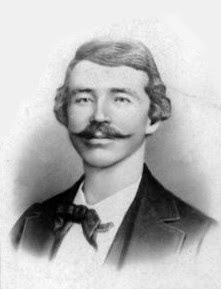
In this part of the country old feelings died hard. The person responsible for the attack on Lawrence was none other than William Quantrill, a guerrilla leader with southern sympathies whose gang of marauders were referred to as Quantrill's Raiders. Quantrill's guerrillas were so violent and out of control the Confederacy disavowed any connection to them. Jesse James was a member of Quantrill's band and the end of the Civil War did nothing to alter Jesse's hard nosed pro-southern attitude. Some historians contend that the crimes and mayhem perpetuated by the outlaw Jesse James was his way of continuing his own private war.

william quantrill photo
William Quantrill, guerrilla leader
This new group of anti-social outlaws planned crimes mostly put together by Jesse James himself. The Blue Cut robbery was one of them. Blue Cut refers to a 25 mile section of curving track of the old Alton and Chicago Railroad near Glendale Missouri.

The location was chosen because the trains had to slow down to 20-25 MPH to manage the turn. Masked men blocked the tracks. The engineer could see someone waving a lantern and he also saw that he was masked. At that point he realized these were robbers and had no choice than to brake. When the gang entered the express car they demanded that the safe be opened. The express agents tried to say they didn't have the combination. There was a brief struggle and finally one of the agents opened the safe. During this time other gang members robbed passengers in the cars to the rear.


A Long Career of Crime


Most historians contend that between 1866 and 1882 Jesse James  and his gangs robbed nine banks, eight trains, four stagecoaches, the box office of the World Agricultural Exposition in Kansas City and a government paymaster. By the same token, the newspapers of the day may have attributed a few more crimes to the James Gang than what actually occurred. Some of the press no doubt were guilty of sensationalizing some of the crimes. In fact, in those days the press liked to sensationalize many stories, not just those about Jesse James. This type of reporting can produce a legend. Sometimes the legend and reality can be two different things. There were instances in which Jesse James corresponded with the press pointing out that such and such a robbery had nothing to do with him.

The photo below left is the Clay County Savings Association. It is considered the site of the first daylight bank robbery in U.S. history. While it was attributed to the actions of Jesse James there is some doubt whether he was involved.


clay county bank historic site
Clay County Bank site
An example of how some of the public sentiment in regards to Jesse James, the excerpt below from a letter to the St. Louis Post Dispatch dated June 5, 1874 from a unnamed sender is telling.


"Not many days ago I saw the celebrated Jesse W. James in the city of Galveston, talked with him, was introduced to his wife, and recognized in her an old acquaintance of Jackson County—a lady whom I had known both before and since the war, and one who had been of immense service to the Southern guerrillas when they were operating upon the border in 1862 and 1863.
I had a long talk with Jesse. He was waiting for a vessel bound for Mexico, where it was his intention to go with his wife to Vera Cruz and from there into the interior, and take him a farm. Frank was with him, and they appear to have many friends and acquaintances in Galveston."


Nobody knows for sure if the above statement was actually sent to the paper, but if it was it illustrates how newspaper stories can build celebrity images when perhaps the image shouldn't apply. You could probably compare this to how some papers reported on Bonnie and Clyde and John Dillinger. Papers reported on the personal doings of outlaws similar to how the media today reports on Hollywood celebrities. A few facts and lots of embellishment.

A Bounty On His Head

bonnie and clyde photo
Bonnie and Clyde 1932-34
After the Blue Cut train robbery there was a lot of pressure to capture Jesse James. He was using an assumed name. The Missouri governor put out a $10,000 reward for his capture. The gang was squabbling over dividing the Blue Cut spoils which wasn't nearly a large as what Jesse expected.

The gang was nothing like to earlier James Younger group. Everyone distrusted the other and the Blue Cut train robbery proved to be Jesse James last. The west was changing in the 1880's. The Indian Wars further west were beginning to end and the lawlessness that had to a degree been tolerated since the end of the Civil War in states like Missouri  was also coming to an end. States like Missouri were becoming more organized including their law enforcement efforts and the marauding nature of James escapades were becoming harder to pull off.

 Much of the mayhem generated by the earlier James gang was attributed by many journalists to their anti-Union sentiment and this too was fading away with the years. The James gang was no longer relevant to the civil progress being made in Kansas and Missouri.

patee house in st joseph missouri
Patee House, St Joseph, MO
Jesse James cheated death for decades. One site that remains quite popular to tourists and tourist/historians is the house where Jesse James was assassinated by his former gang partner Robert Ford.
Shop Amazon Warehouse Deals - Deep Discounts on Open-box and Used Sports Equipment


There have been several Jesse James movies produced.  If you saw the recent movie "The Assassination of Jesse James by the Coward Robert Ford" you saw much of the story of Jesse James death and final days. If you haven't seen the movie I highly recommend that you do. The Jesse James Home Museum is located in St. Joseph Missouri. It was moved a few blocks from it's original location and is at 12th and Mitchell, St. Joseph.


Another point of interest in St. Joseph is the Patee House shown above located at 1202 Penn, St. Joseph's only National Historic Landmark. The Patee House was originally built in 1858 as a luxury hotel. It's museum is filled with artifacts from the frontier era of Missouri as well as items regarding Jesse James history. The hotel was the site of the formal investigation undertaken after James assassination. It was also the headquarters for the Pony Express in 1861. An excellent companion trip with a St. Joseph visit is the Oregon Trail History of Independence Missouri.

Another interesting story you'll enjoy is that of the Tombstone Epitaph.

(Clay County Bank and Patee House photos courtesy of Americasroof at en.wikipedia. Creative Commons 2.5, Additional photos and images from the public domain)


Tuesday, July 26, 2011

Mark Twain / America's Famous Steamboat Pilot

 If there ever was a man who lived so many different lives in a span of 75 years, it was Samuel Clemens who we often refer to as Mark Twain. Who was Samuel Clemens? Who was Mark Twain? Using both of his names he was an author..he was an American humorist...he was a newspaper journalist...he wrote travelogues...he received several honorary degrees...he traveled the world and he was a steamboat captain. Add to that having a U.S. Postal stamp issued in your name. Quite a lot of adventure in one man's lifetime. The biography of the young Mark Twain is quite amazing.

There are many sites in America where one can learn more about Samuel Clemens/Mark Twain. Travel to Missouri and visit the town of Hannibal where the young Samuel Clemens spent his boyhood. This is the setting for his Huckleberry Finn and Tom Sawyer novels. Add to your vacation trip planner the Mark Twain Boyhood Home and Museum. 
There is also the Steamboat Mark Twain in Hannibal of which you can take an enjoyable river cruise. If your travels include a California vacation there is the Mark Twain Monument located at Angels Camp, a very unique old California mining camp which is now a tourist destination and very near to Yosemite National Park about 120  miles east of San Francisco. Angels Camp is also home to the Jumping Frog Jubilee held every year at the Calaveras County Fair.

At 12 years of age Samuel Clemens after losing his father, an attorney and local judge, in Hannibal became a printers assistant and typesetter working in such cities as New York, Philadelphia and St. Louis.  The picture to the right is of Samuel Clemens at the young age of 15. Samuel Clemens was self educated spending days after days at the public libraries absorbing books of the greatest variety of subjects available.  His explanation was that he felt this regimen would provide a wider scope of knowledge than one could attain in a public school. There was always something about the young Mark Twain that yearned for nonconformity.


At about the age of 22, Samuel traveled by steamboat down the Mississippi to New Orleans on a planned Amazon River journey with a $50 dollar bill he found on the street. The upper Amazon River had recently been explored with much fanfare and Clemens was caught with the bug to go there. While on this Mississippi trip he was awed at the skill of the steamboat's pilot and the steamboat's pilot gave Clemens the inspiration to begin training to become a pilot himself. It probably didn't take too much urging since Samuel was infatuated with the pilots job to begin with. In those days a steamboat pilot was paid about $250 per month which is the equivalent to about $75,000 today. Not a bad sum of money and with it came the prestige of calling yourself a steamboat pilot. Young Samuel Clemens jumped in with both feet. Clemens eventually convinced his younger brother Henry to join him on the steamboats. Henry did but met with misfortune when he was killed during the explosion of the steamboat Pennsylvania in 1858. Samuel had been with his brother on the Pennsylvania but transferred off shortly before the explosion.  I need to point out that steamboats, while appearing serene and relaxing the relative slow way they travel down a winding river, were known to be quite dangerous during their heyday. Thousands of people were killed during this era while traveling on steamboats. Records show that the biggest danger was from exploding boilers. Two such disasters were the Saluda Explosion in Lexington Missouri and the Sultana Explosion just a few miles north of Memphis Tennessee. Steam boilers during the middle of the 1800's were a new technology in as much as the safety mechanisms in place were not sufficient. The problems regarding steamboat boilers were that pressure instruments were unsatisfactory as was in many instances the physical oversight of the boilers by the riverboat crew. In other words, unmonitored boilers could build up too much pressure and explode. Often an explosion would occur because the boats captain would order maximum speed or in these cases too much speed for the boilers to operate safely. A boiler explosion within the confines of a boat's structure would be devastating to those on board. It's one thing having a boiler explode in the open and quite another down deep within the boat's structure as shown in the picture below left. Boilers were located down in the bowels of a riverboat. In steamboat history the problem of providing safety became so dire in the 1850's that Congress, because of public pressure, had to pass several regulatory acts to try to make things safer on our rivers. An interesting side note about Samuel Clemens is that he supposedly had a dream beforehand of the explosion that killed his younger brother and after the disaster became involved with paranormal associations.


Samuel Clemens/Mark Twain after eighteen months of apprenticeship obtained his steamboat pilot license which was his dream since childhood. In his later writings he would reflect that the riverboat pilot's job was the most satisfying work of his life. He felt that the riverboat's pilots These and other thoughts of Twain's are in his literary work, Life On The Mississippi. He felt that the riverboat pilot's job offered more freedom than other positions where one toiled all day under the watchful eye of a boss or master. He enjoyed the prestige, freedom and of course the high salary paid to pilots on the Mississippi. It was common that steamboat pilots would gather at local watering holes and trade stories and Twain was one of these. The young Mark Twain was able to help his family financially out of his generous salary. It should be noted that during his eighteen month apprenticeship he was not paid a salary so when he achieved the goal of licensed river pilot that was quite a big event both financially and prestige wise. His childhood ambition was achieved at the age of 23.
Just like his penchant for book reading, the river was a great addition to his education about people and human nature in general. Samuel Clemens spent four years on the river and stated that in those four years of river schooling he got to know every bit of human nature that you would find in fiction, biography or history.


Shortly after he became a licensed pilot and Abraham Lincoln's election the Civil War broke out. Pilots were trying to decide which side to join. His partner and earlier river pilot teacher and mentor, Horace Bixby, sided with the North. Clemens couldn't decide and had to think about it. At first he joined a Confederate regiment from Missouri but after a short while got tired of it and eventually changed sides to the Northern cause. While on the Northern side he befriended a man high up in the Lincoln administration who was destined to become governor of the new Nevada Territory. Samuel Clemens journeyed west with this group using much of his riverboat pilots savings and ended up in the new territory. This is where another chapter of Clemens life started. It was in Nevada Territory where Samuel Clemens not only took on a new profession as a newspaper journalist in the silver mining town of Virginia City Nevada but also took on the pen name of Mark Twain.

Whether it's a visit to Hannibal Missouri and the Boyhood home of Samuel Clemens or to Angels Camp California, there are many ways to learn more about Mark Twain, a very unique American. These sites will make excellent additions to your western U.S. road trip.


Monday, June 20, 2011

Quantrill / The Raider

Our stories in "Western Trips" revolve around historic events of importance. Places where history unfolded. Some are more pleasant than others but all hold historic significance. You can find reminders of historic events everywhere around you and perhaps you might wish to visit a few of our historic sites on your next vacation or weekend road trip. The story that follows is an excellent example.

Missouri, Kansas and the Civil War

During the American Civil War, the people of the states of Kansas and Missouri were quite divided about the question of slavery. You could say that this region was a hotbed of partisan divisions. In 1861, the state of Missouri voted down a motion to secede from the Union 89 to 1. As a result, there were many skirmishes, some more bloody than others. Obviously, the Civil War was fought from Gettysburg in the north to Louisiana in the south. It was fought as far west as Arizona. What happened in the Kansas and Missouri areas however was nothing short of a terror campaign and what occurred in Lawrence, Kansas was almost unbelievable in it's violence.

William Clarke Quantrill

One name that stood out the most was Ohio born William Clarke Quantrill, pictured on the left. Quantrill led a loosely organized band of Pro-Confederate irregulars. This band of rangers, at one time numbering over 400, went on what only can be described as a rampage of terror and killing rivaling the worst carnage imaginable during the Civil War era. Supposedly one member of Quantrill's band of irregulars was the then 16 year old Jesse James and his older brother Frank. The infamous Younger brothers, later allies with the James brothers during their attempted Northfield Minnesota bank robbery, were also members of Quantrill's group.

Some people would describe Quantrill as a southern patriot. Many others would accuse him of being nothing short of a butcher. The fighting taking place there was guerrilla warfare. Quantrill fought against both the Pro-Union "Jayhawkers" as well as regular Union troops sent to Missouri and Kansas. William Quantrill's mind set changed during the war when the Union commanders labeled him a murderer and robber as opposed to being an enemy combatant. At that point the Quantrill band, later referred to as 'Quantrill's Raiders", acted as marauders with no consideration for any established rules of warfare.

The Burning and Killing in Lawrence Kansas


At one point during 1863, Quantrill decided that the town of Lawrence, Kansas was filled with Union sympathizers and that it had to be attacked. As a result, on the morning of August 21st, 1863 Lawrence was attacked but a better description would be that it was literally destroyed as the image to the right depicts.

Quantrill reportedly invaded the town with some 450 men, killing, looting and burning. Numerous buildings were burned to the ground. At least 150 Lawrence males were killed, most offering no resistance. Some of those killed were simply farmers not really involved in the North/South struggle. As a response to this deadly raid, the U.S. Government ordered the depopulation of three and one-half counties in Missouri that bordered Kansas.


Historians have long debated the true motives behind the Lawrence Massacre as it was referred to by the North. The Quantrill gang looted Lawrence which is in conflict with truly Confederate patriotic intentions. In fact, some of Quantrill's guerrilla troops were known to be simple outlaws prior to the Lawrence attack. I suppose outlaws can be partisan as well.

For sure there were a tremendous amount of fatalities on both sides of the Civil war conflict, but what stands out the most about the Lawrence attack was the large scale killings of unarmed noncombatants. The patriotic argument is that the Union forces and Pro-Union irregulars also destroyed southern communities. As you can see, the perspective taken was strictly along partisan lines. The argument persists to this very day.


To emphasize the difference of opinions concerning the Lawrence, Kansas episode, the picture at left is of a Quantrill reunion held in 1875, some twelve years after the massacre. Obviously, the participants were not prosecuted as war criminals after the war.


As far as William Quantrill was concerned, he was killed in 1865 while fighting in Kentucky with only about a dozen men. He died of his wounds shortly after the battle in a military hospital.


Just so you don't think that conspiracy theories are only a modern day creation, rumors sprang up that Quantrill was spotted in various parts of the country as well as Canada.

As reported in a 1907 newspaper story, a member of the Michigan cavalry during the Civil War claimed he ran into Quantrill on Vancouver Island while working in the timber industry. The man who stated he was Quantrill went by the name of John Sharp. During the encounter the man reportedly went on to describe Quantrill raids in Missouri and Kansas in great detail. Sharp claimed that he survived the Kentucky battle and became a cattleman in Texas before moving to Oregon and then on to Canada. Strangely enough, shortly after the news story appeared, Sharp was found beaten and died shortly thereafter. He gave no information about his attackers before his death. Fact or fiction? You be the judge.

If your road trip takes you near the Lawrence, Kansas area there are several interesting historic sites and tours regarding the Quantrill Raid. Travel information, travel guides and specific points of interest can be found in the websites listed below. 


www.visitlawrence.com/attractions/hobbs-park-memorial

www.kansastravel.org/oakhillcemetery/index.htm


See the additional Western Trips articles on the links below...

Jesse James and the Blue Cut Train Robbery

U.S. Cavalry Museum at Fort Riley Kansas

(Article copyright Western Trips. Photos and images in the public domain)


Saturday, May 14, 2011

The Day Of The Saluda Explosion And The Federal Government's Response

memphis steamboats

During the first two-thirds of the 19th century, steam boating was the most popular mode of transportation.

The first steamboat appeared in North America circa 1815 and the number of boats increased every year. The old images above show how steamboats lined up one after another in Memphis and below portrays the old Levee area of St. Louis which was always busy, night and day, with steamboat traffic. To understand how exciting this new mechanized way of river transportation was, one needs only to read the stories and quotes from Mark Twain himself a riverboat pilot.

Fast Transportation for the Era

Steamboats offered a fast mode of transportation. In fact, faster than anyone had ever experienced. A steamboats massive power came from it's boilers. The steam engine was a spectacular invention, one in which came before much of the inherent science of it was understood. Steam pressure inside a boiler turned the boat's paddle wheels. More pressure meant more power and more power meant faster speed and faster speed seemed to be in demand.

Steamboat Boiler Dangers


saluda steamboat explosion
When unregulated pressure continues to build in a steamboat's boiler you can have a spectacular explosion like the image to the right.

This is exactly what happened on Good Friday, April 9th, 1852 at the docks of Lexington, Missouri.

The boat was chartered to bring Morman converts to Utah who had arrived from Europe. The immigrants sailed to New Orleans then up the Mississippi to St. Louis. From there a steamboat was to take them to Council Bluffs, Iowa where they would begin their overland journey to Utah.

The boat exploded very near the dock after only about two revolutions of it's paddle wheels. Records are a bit inaccurate but it appears about 175 passengers boarded the Saluda in St. Louis. The death toll of the explosion was over 100 people some of which were bystanders on the dock. So violent was the boiler explosion that parts of bodies were strewn everywhere including in the town itself. The body of the captain and part owner of the vessel was found on the far side of the dock warehouse. Other victims were found on top of nearby bluffs. To give you an idea of the hazards of steamboat travel in that era, there were a total of 34 steamboat accidents/disasters in North America during the two year span 1850-1851.


Out of that amount 12 of these mishaps were due to boiler explosions. The total death toll for for all mishaps those two years were an astounding 525 people. Out of that figure 199 died because of boiler explosions. During the year 1852 there were 6 other steamboat boiler explosions aside from the Saluda.

To demonstrate how bad the boiler problem was, 13 years into the future the steamboat Sultana, image at right, exploded it's boilers on April 27th, 1865 near Memphis costing the lives of an estimated 1,300 to 1,900 people most of whom were returning Union soldiers who had been held in Confederate prisons. There were estimated to be about 750 survivors. The Sultana had been extremely overloaded with the returning troops.

Another fact about steamboats during this era is that they had a life span of some 3-5 years. This was not only due to boiler explosions but also from collisions, snagging an object and sinking, catching fire and running aground. It's almost unbelievable when you compare that to our modern transportation system.

Boilers Powered Just About Everything


Boiler explosions were not only confined to steamboats. The picture at left shows a train locomotive after an explosion. With the locomotive the explosion happens outdoors. You can imagine the total destruction when a boiler blows apart inside the wooden structure of a steamboat. Many steamboats also had more than one boiler.

The boiler problems were a result of new technology that wasn't fully understood coupled with lax government oversight. The lax oversight was due to Congress not wanting to be accused of hampering national expansion by regulating the steamboat industry. Travel safety in that era was not a top priority.

There was a lot to be learned about steam boilers. How much boiler plate thickness was required for a certain amount of pressure? Why were pressure relief valves not installed in many boilers? How can one accurately measure how much pressure is in the boiler? What should the boiler water levels be? These were just a few of the questions that were open to speculation. A steamboat boiler needed to be constantly monitored by an engineer or crewman. The boilers drew in large amounts of water usually from beneath the boat. Rivers have a lot of mud  and often the mud and pebbles would be sucked into the pipes. An explosion could occur if the water was blocked long enough causing the pressure to increase.

Steamboat Regulation


Safety Inspection of U.S. flagged merchant vessels powered by steam or partially by steam began in 1838.

While the intention was to protect lives and property, the reality was that things didn't improve much afterward. The Steamboat Act of 1852 was the result of yearly increases in maritime disasters and carnage. The 1852 Act put more formality into the federal inspection effort. Although the new act started things in the right direction the inspection procedures still proved inadequate.

The Sultana disaster in 1865 was an example. Another Congressional Act was instituted in 1871 which formally created the Steamboat Inspection Service. Any progress that was made since 1852 was kept and in addition a formal set of maritime safety codes were established. The 1871 Act pertained to all steam powered vessels including freighters, tugs and ferries.

See additional Western Trips photo article on the links below...

The Tall Ships

A Steamboat and an Indian War

Visit Lexington Missouri

Lexington, Missouri is a short 35 mile drive east of Kansas City. I think you will find it interesting to stop and visit the memorial in Lexington's Heritage Park created in 2002 for the victims of the Saluda disaster.

Lexington has a very rich history including a famous Civil War battle site and a city park commemorating where Lewis and Clark made a stop during their historic journey west.

(Article copyright Western Trips. Photos and images in the public domain)

The sites below will give you plenty of information.

www.historiclexington.com

www.mostateparks.com/park/battle-lexington-state-historic-site

 www.visitlexingtonmo.com/index.cfm?Page=ParksandCemeteries