Western Trips

Showing posts with label Conservation. Show all posts

Monday, October 15, 2012

Bonneville Dam


bonneville dam
Bonneville Dam
When your western trip takes you to the beautiful country of the Columbia River Gorge in Oregon, there is a very fun, educational and informative stop you will want to add to your road trip planner.

The Bonneville Dam, located about forty miles east of Portland Oregon, is a great travel stop for the entire family. Not only do the exhibits at the Bonneville Dam explain how the dam operates and produces hydro-electric power, but also how the fish of the Columbia River navigate themselves upstream past the dam to spawn. It's really a fascinating story and the way it's presented at the Bonneville Dam visitor center is quite unique and entertaining.

A trip to the Bonneville Dam is an excellent addition to your Columbia River Scenic Highway sightseeing agenda.

The Great Challenges of Building the Bonneville Dam 

The U.S. Army Corps of Engineers has been involved in the Columbia River Gorge since the late 1870’s. It was then that they constructed the Cascade Locks. The locks were badly needed to help improve Columbia River navigation past the Cascade Rapids. When some of the early Oregon Trail pioneers chose to proceed down the Columbia River in the 1840's, the river's rapids were quite a challenge, often times a deadly one.

See our Western Trips photos and article on Oregon City, the end of the historic Oregon Trail.

electric turbine diagram
Diagram of how a turbine operates to produce electricity
The Bonneville Dam was constructed in 1938. Construction time took about five years. It's second power house was added in 1982. The dam is owned by the U.S. Army Corps of Engineers. It is the first of eight locks and dames along the Columbia and Snake Rivers. Finding a suitable location to erect a dam can be difficult. In the case of the Bonneville Dam, the site chosen had ample bedrock to provide the all important foundation for the dam. Construction of the dam presented many challenges. These included the depth of water, the speed of the river's current, the harsh weather conditions, and the annual summer flood caused by mountain water runoff. In addition to these challenges, constructing the Bonneville Dam also meant that miles of roads and rail tracks would have to be relocated and massive timbers were employed to help divert water away from the construction site.

At the time of construction, the Bonneville Dam was built for two initial reasons. One was to add jobs during the country's Great Depression. The other was to provide needed hydro-electricity to the Pacific Northwest. The proposal for a dam on the Columbia River was also a presidential campaign pledge of Franklin Delano Roosevelt.

bonneville dam electric turbine
Old turbine exhibit at Visitors Center
Hydro-Electric Power

Hydro-electric power at a dam is produced when water flows through it to the river below. A turbine is what actually produces the power as shown in the diagram. A turbine consists of metal coils surrounded by magnets. Electricity is made when the magnets spin around the coils. Obviously this is pollution free energy as opposed to coal fired generators.

The first power house built had 10 generators. These were brought online between 1938 and 1944 and had a generating capacity of 526,700 kw of power. The second powerhouse was constructed with eight generators that produced 558,200 kw. The hydro-electric power that the dam produces is sent to the Bonneville Power Administration grid. From there power can be sent to Oregon and Washington as well as a number of other northwestern states. Bonneville power had a big place in building America's northwest.


A Most Scenic Site

The Bonneville Dam is in the Columbia River Gorge which is arguably one of the most scenic areas in the United States. Driving there from Portland Oregon takes you along the Columbia River Scenic Highway constructed during the first part of the 1900's. On the way to visit the dam, tourists will pass by numerous falls and other historic sites which makes getting there a lot of fun.

bonneville dam locks
Bonneville Dam locks door
You will enjoy our Western Trips article and photos on the various water falls in that area. See the Columbia River Gorge.

 In 1986, the Bonneville Lock and Dam project was placed on the National Register of Historic Places and was later moved up to a National Historic Landmark.

Visiting the Bonneville Dam 

Getting to the Bonneville Dam Visitors Center requires all people and cars to pass through a security gate. The Bonneville Dam visitor's center is a separate building from the main powerhouse. The Visitors Center contains many exhibits explaining just how the dam produces hydro-electric power ans specifically about the history of the dam itself.

fish ladder at bonneville dam oregon
Fish ladder at Bonneville Dam
Of special interest is how the dam helps fish swim upriver which is essential for specie survival. Bonneville Dam fish exhibits are very interesting. It's educational to see the work done at the dam project to accommodate the various species of fish. The Visitors Center contains two levels.

On the lower level you can view through a glass wall the fish actually making their journey upriver. Just outside the Visitor Center you can view the "fish ladder" which allows the fish to essentially climb the river. This also allows for a Bonneville Dam fish count. A fish ladder is a series of pools arranged in ascending steps at the side of a stream, enabling migrating fish to swim upstream around a dam or any other obstruction. It's really a fascinating thing to see and ensures that the Columbia River fish ecological balance is retained. Adjacent to the dam is the Bonneville Fish Hatchery.

In the Bonneville Dam Visitor Center you'll also see exhibits about the old area history dating back to the Native American days. These were the early days of the Lewis and Clark Expedition and several decades later the migration of thousands of pioneers over the old Oregon Trail.

The Bonneville Dam Visitor Center also offers guided tours depending on the season. The Bonneville dam tour is very informative and you can actually go into the electricity generation building there.  Outside of the Visitors Center when you first arrive, take note of the large turbine wheel exhibit shown above from one of the original powerhouse turbines.

(Photos from author's private collection)


View Larger Map

Thursday, May 17, 2012

John Muir Home / Muir National Park

The John Muir National Historic Site located in Martinez California preserves the Victorian house and a part of the fruit ranch where the naturalist and preservationist John Muir lived from 1890 to his death in 1914. The historic site was established in 1964. While John Muir lived in Martinez, in 1916 he worked on the very foundations for the creation of the National Park Service. In a large way, the history of the National Parks is a history of John Muir.

john muir home
John Muir home in Martinez, CA
John Muir, born in Dunbar, East Lothian, Scotland, on the North Sea, emigrated to the United States and on to Wisconsin in 1848, at the age of ten years. John Muir had a fairly harsh early life working on the family farm with a strict father who insisted he memorize the Holy Bible.

 It was from that harsh beginning that Muir gradually wandered away to read and pursue subjects that caught his interest. Those subjects were primarily found in the realm of mechanization and nature.  John Muir was certainly not wealthy as a young man. He worked in sawmills, a factory, on farms and as a sheepherder. Ironically, his first acquaintance with what today is Yosemite National Park was while working with a man who was trying to construct a sawmill.

The John Muir National Historic Site in Martinez highlights the life and accomplishments of Muir from about 42 years of age on. The Victorian home site where visitors can now tour throughout was originally built by Muir's father in-law, Dr. Strentzel, who had come to California during the Gold Rush era. Built in the Italianate style, the house had all the modern conveniences including gas lighting, coal burning fireplaces and flush toilets. The home had a phone installed in 1885.

In 1880, Muir married  Louie Wanda Strentzel, the daughter of this doctor and fruit grower in Martinez. At the time, Louie's father had a 2,600 acre ranch. The 8.8 acre John Muir National Historic Site today in Martinez California, preserves the house where Muir lived with his wife and two daughters, Wanda and Helen.

At first, John and his wife Louie lived in the Strentzel's original home about one mile south of the mansion. When Dr. Strentzel died in 1890, Louie's mother asked her and John to join her in the new larger house. John Muir and his family lived on the mansions second floor. The 17 room mansion in the Alhambra Valley which Dr. Strentzel built in 1882, was his wife's ultimate inheritance.

John Muir in Martinez CA

john muir kitchen refrigerator
Early refrigerator in Muir kitchen
John Muir worked as ranch manager for his father-in-law for about ten years and during that time was able to amass $250,000 which was quite a fortune. That money allowed him to retire at 42 years of age and devote the remainder of his life to the movement to save America's natural resources.

Among his accomplishments were his influence to urge the U.S. Government to set aside public lands for future generations to enjoy. In this same vein were his efforts to help found the Sierra Club of which he served as it's first president. John Muir was credited with writing over 300 magazine articles and 12 books. Writings by John Muir included My First Summer in the Sierra, The Mountains of California and A Thousand Mile Walk to the Gulf. At the time of his death, in 1914 Muir was writing a book about his Alaska travels. It was said that at the time of his death he had enough notes prepared for perhaps ten additional books.

John Muir The Inventor

What some might not realize was that John Muir was an inventor as well as a preservationist. As a youngster on the Wisconsin farm, Muir constructed many devices including water-wheels, thermometers, hygrometers, clocks, automatic horse feeders, and an "early-rising machine," a device that dumped the sleeper out of bed at a set time.

One of his earlier inventions was a "clockwork desk.  Most of his earlier devices had to be constructed early in the morning or late at night to avoid the wrath of his strict father. In the book about John Muir, Rediscovering America by author Frederick Turner, the author points out that the motivation for Muir's inventing and tinkering around had more to do with the fun of it and as a way to forget the mind numbing drudgery of the farm work rather than trying to build something of practical use.

While his father preferred quite strongly that John should be studying scripture each evening, the young Muir hid in the basement working on his contraptions. One of these devices was actually a very large thermometer which while hung on the barn wall could be read while working down below in the fields.

muir home solarium
Solarium in John Muir Home
In the John Muir biography of 1913, The Story of My Boyhood and Youth, Muir described his clockwork desk invention which he used in his college dorm room...I invented a desk in which the books I had to study were arranged in order at the beginning of each term. I also made a bed which set me on my feet every morning at the hour determined on, and in dark winter mornings just as the bed set me on the floor it lighted a lamp. Then, after the minutes allowed for dressing had elapsed, a click was heard and the first book to be studied was pushed up from a rack below the top of the desk, thrown open, and allowed to remain there the number of minutes required. Then the machinery closed the book and allowed it to drop back into its stall, then moved the rack forward and threw up the next in order, and so on, all the day being divided according to the times of recitation, and time required and allotted to each study.

Touring the John Muir Historic Site


john muir riding saddle
John Muir's riding saddle exhibit
Some of the interesting things you'll tour in the home today is the kitchen with it's coal fired stove and the carving table. Both of these items are the originals from the Muir era. In the rear on the first floor is a room with it's original long sliding door which was also used as an examining room and office by Dr. Strentzel. In the living room is the brick fireplace that John Muir had rebuilt as a result of damage from the 1906 earthquake.

A tour of the second floor shows the bedroom arrangement and in the front portion is a room that John Muir used as his office. The desk facing the front window of that room features Muir's own desk.

An interesting photo in the house shows the front porch area where two small palm trees were sitting during the first decade of the 1900's. Today, you'll still see those same two trees however they are now towering palms located at each side of the steps leading to the front porch.

Two additional short trips we've featured on Western Trips that you'll find interesting in the San Francisco Bay area are a visit to the USS Hornet floating museum in Alameda and a tour of the famous Mare Island which was the U.S. Navy's first Pacific Coast shipyard.

Also, see our travel article on Beautiful Tomales Bay California.

The John Muir National Historic Site is located at the Alhambra exit on Hwy 4 in Martinez California. The site is administered by the National Park Service. The tour of the home and grounds are very interesting both in relation to the life and times of America's premiere preservationist and naturalist John Muir and of life in the in this region of northern California during the late 1800's and early 1900's. It's a great stop and an excellent addition to your San Francisco area vacation planner.

(Article and photos copyright Western Trips)


View Larger Map

Wednesday, February 29, 2012

Redwood National Park / Northern California

giant redwood tree
Giant redwood tree
Redwood National Park is one of our most unique National Park that any list of western trip destinations must include it. The native people of California's northern coast called the redwood area home for thousands of years.

 Traditional homes of the region's Native Americans usually were built using planks split from fallen redwoods. Today, Redwood National Park, which was officially established in 1968, is really a string of lands which are operated by both the state and federal government and in this fascinating setting you'll find some of the world's tallest trees. Some redwood trees are actually five stories higher than the Statue of Liberty. Redwood National Park can really be called Redwoods National Park since there are several adjoining parks all together.

The Redwood Tree

One of the mysteries of the redwood tree is it's root system. The root system of the redwood tree is very shallow, especially when you consider the great height the mature tree attains. There is no tap root and the other roots may only go down six to twelve feet. The major roots are about 1 inch in diameter. and they typically span 50 to 80 feet. The redwood can live an astounding 2000 years, can weigh up to 500 tons, and reach over 350 feet in height. There is no other tree on earth with these type dimensions.

redwood tree trunk
An enormous redwood tree trunk
The north coast of California is an ideal place for redwoods to grow and flourish. Areas of moderate summer temperatures, no freezing, lots of winter precipitation and fog are ideal locales for redwoods and fairly accurately describes the northern California coast.

This area of California receives an average of 70 inches of precipitation per year with 90% of it during the period between October and April. These are the California monsoon months. During the summer months rain is almost nonexistent. Speaking of water, a 200 foot redwood tree with a trunk 5 feet in diameter holds about 34,000 pounds of water.

Another few interesting facts about the redwood is that the oldest trees are not necessarily the oldest and the trees needles on the lower part of the tree are different than those on the upper portion.

Redwood National and State Park

One very popular activity in Redwood National and State Park is hiking. In fact, California National Parks offer some of the best hiking trails found in North America. If you enjoy hiking you'll absolutely love this park. Several scenic trails are there for the hiking.

The Redwood National Park and the smaller state parks that surround it have over 200 miles of hiking trails covering an elevation change of over 3,000 feet. The Lost Man Creek Trail is one of the favorites. This strenuous ten mile groomed trail takes you on a former logging road with steep grades and switchbacks in the southern portion of the park. You'll cross Lost Man Creek on a bridge affording excellent views of the stream below. Mature redwood trees line most of this hike. To access Lost Man Creek Trail, find the marked trail head at the Lost Man Creek Picnic Area on Lost Man Creek Road, or a second access point on Bald Hills Road.

stand of redwood trees
Sunlight creeps in through the redwoods
Another fun trail in the Redwoods National Parks is the Rellim Ridge Trail. This trail crosses through the northern side of Redwood National Park and the Jedediah Smith Redwoods State Park. The 4.3-mile trail has two trail heads. The south trail head is past the gate on Hamilton Road, and the north trail head is just past the west end of Howland Hill Road. The moderate hike is not steep but there are several non-level grades. After you climb to the ridge you'll have a great view of the Crescent City California harbor.

A perfect trail for novice hikers is the flat Crescent Beach Section in the Coastal Trail section of the park. This 3.5-mile trail is almost entirely flat and great for a family hike. The trail ends at a beach, where hikers can search for shells or walk along the water. Some hikers view Roosevelt elk grazing in the prairie areas next to the beach.. Access the trailhead at the Crescent Beach picnic area on Enderts Beach Road.

Campers will note that all of the camping sites in Redwood National Park are operated by the state. There are four developed campgrounds but without trailer hookups. Bear precautions need to be adhered to at all campgrounds. Food and scented items, such as toothpaste need to be kept either in the trunk of your car or in metal food containers. Bear proof canister are available to borrow from information centers.

Visiting Redwood National Park

Getting to Redwood National Park and the State Parks is easy by driving US Hwy 101 from either the San Francisco Bay Area or from Oregon. Orick California is the southern gateway to the Redwood National and State Parks. U.S. Hwy 101 runs right through the middle of Orick. The northern gateway to the park is Crescent City California near the Oregon border. Crescent City is also where you'll find lodging at a variety of rates. Something to fit just about every budget.

As with almost all National Parks, you'll be able to enjoy interpretive programs. These programs cover everything from trees to tide pools. Be sure to check at park headquarters for the schedules of campfire programs and other activities throughout the year as well.These are some of the fun things that make a trip to Redwood such a great family getaway and educational as well. 

While in northern California you may also want to explore the historic Lava Beds National Monument and the story of the Modoc Indians as well as the Luther Burbank Home and Gardens in Santa Rosa, about 60 miles north of San Francisco. 

(Article and photos copyright Western Trips)


View Larger Map

Tuesday, December 13, 2011

Grumman S-2A Tracker / Submarine Warfare to Forest Fire Fighting

pacific coast air museum 
One of the most unique aircraft on display at the fascinating Pacific Coast Air Museum is the Grumman S-2A Tracker, an airplane that has supplied great service to the United States. The Pacific Coast Air Museum is a rare find in beautiful Sonoma County California and makes a fun companion side trip during your wine country tour. Located just a few miles northwest of Santa Rosa, the air museum which is located at the Charles Schulz Sonoma County Airport is a fun stop for young or old and everyone in between. Sonoma county's wineries are located all around the airport so a side trip there works out well during a wine country vacation.

The Grumman S-2A Tracker


The Grumman S-2A Tracker was built for the military as a submarine hunter aircraft. The plane is powered with two Wright Twin Cyclone R-1820 nine cylinder radial engines. Each engine produces 1,500 horsepower. The cruise speed of this aircraft is 150 MPH with a top speed of 195 MPH. The Grumman S-2A has an empty weight of 18,750 pounds with a maximum takeoff weight of 27,000 pounds. Dimensions are a 70 ft wing span, 43 ft 6 in length, 16 ft 7 in height and a wing area of 496 sq ft.

firefighting airplane
Grumman S-2A Fire Tanker
The S-2A Tracker was designed to be a replacement for the Grumman AF-2 Guardian. The Tracker's first flight was in December 1952 and it entered Naval service about 14 months later in February 1954. The aircraft had a long military service life, not being replaced by the Navy until 1976. During it's service with the Navy, the S-2A was a carrier based anti-submarine aircraft.

Fire Fighting Capabilities

The Grumman S-2A aircraft shown in this story, after it's service in the Navy, was a longtime member of California's fire fighting aerial fleet. This particular firefighting aircraft, while serving the California Department of Forestry, referred to as the CDF, was based in Santa Rosa. When the Forestry Department converted it's fleet to turbines the Pacific Coast Air Museum was able to take it over. Now this aircraft is a permanent display on the museum grounds. An interesting fact is that the Sonoma County Airport has long been a Calfire Attack Base. There are many CDF Attack Bases located throughout California. The Sonoma CDF base was established in 1964 and according to their government web site responds to about 300 calls each year. The Attack Bases serve to provide quick initial attack on wildland fires. The Sonoma Attack Base currently has on hand one OV-10 Bronco and two of the newer S-2T tankers. The base covers a fire protection area of some 4,000 square miles and pumps about 300,000 gallons of fire retardant per year. The current S-2T's each carry 1,200 gallons of retardant. Sometimes an aircraft of this type is referred to as a water bomber but in actuality the plane carries retardant with names such as Fire-Trol and Phos-Chek. Some of today's aerial firefighting craft also may carry tanks with a gum derivative to thicken the water and reduce runoff. Modern firefighting aircraft typically take advantage of the newest retardant additives.

Cal Fire


Airplane fire fighting of course includes more than the aerial tanker planes. The Smokejumpers, who probably have one of the more dangerous fire fighting jobs, are dispatched from smokejumper bases spread thoughout the western United States.


CalFire currently operates forty-eight aircraft spread throughout the state. being a statewide fire fighting agency, Cal Fire offers protection to about thirty-one million acres of state owned wildlands and also provides emergency services on a contractual basis in about 36 counties. The location of the Attack Bases make it possible in most circumstances for the aircraft to reach a target destination within twenty minutes. Air tactical planes fly overhead during a fire directing both the S-2T tankers and helicopters. According to the state, the annual budget for the Cal Fire program runs about $20 million per year.

cdf insignia
Department of Forestry Emblem on plane
The S-2A's were first purchased by California from the military in 1972 while the Defense Department were replacing them with newer aircraft. After being converted to fire fighting craft, the first was put in service by the CDF in 1973. The S-2T fire fighting airplane which eventually replaced the S-2A was considered more maneuverable and faster.


I enjoyed mu trip to the Pacific Coast Air Museum and would recommend it to anyone passing through the Sonoma wine country. The Grumman S-2A on display at the museum is an excellent example of a wildland fire fighting aircraft.

Visit the Pacific Coast Air Museum


The Pacific Coast Air Museum is located at the Charles Schulz Sonoma County Airport. The airport is just a few miles northwest of Santa Rosa California and just a mile south of the town of Windsor. The airport is just about two miles west of US Hwy-101. If you're coming from the San Francisco area, take Hwy-101 north and exit at Airport Rd. just a few miles past Santa Rosa and turn left.


The Pacific Coast Air Museum also has on display the F-15A fighter jet that was the actual first responder over the New York area on September 11, 2001. This is a rare find for the museum and is a very interesting exhibit.


Lots of fascinating aircraft also on display at the Planes of Fame museums in the Los Angeles area and just north of Williams Arizona near the Grand Canyon. Also, you'll be interested in the marvelously restored and flyable Beech E-18S at the Western Antique Aeroplane and Automobile Museum in Hood River Oregon.

(Photos from author's private collection)

Wednesday, October 26, 2011

The Pulaski Tunnel Trail / Idaho

When your western U.S. road trip includes an Idaho vacation, there is a very historic trail called the Pulaski Tunnel Trail which not only tells a riveting story of what happened back in 1910 but also a story of a firefighting invention that was used to help save people in that year and is still in use today.

The Pulaski Trail Tunnel

Silver Valley's Kellogg Idaho, Courtesy Post Falls Man
The Pulaski Tunnel Trail starts about one mile south of scenic Wallace Idaho on Forest Service Road 456. The trail head is very well marked.

The trail offers a trip into history through the cool forest and past cascading water. There are interpretive markings along the way and to walk the trail and return usually takes about 2 to 3 hours. It's a chance to explore a great Idaho hiking trail and learn about what occurred there over 100 years ago. Wallace Idaho is located in far north Idaho on Interstate-90 in the beautiful Silver Valley.

Great Fires


The story goes back to the Great Fires of 1910 which engulfed the northwest, particularly in the Wallace Idaho and Montana areas. This was an era before smokejumpers and fire fighting tanker aircraft. It was a time when fire prevention in our nation's vast forests was not a high priority. It was also a time of railroad expansion and mostly unregulated logging which was cutting down our forests at a very fast rate.

The problem in 1910 was pretty much the same as in the late 1800's regarding the devastating fires in both Pestigo Minnesota and Hinckley Minnesota. The forests were being cut down at an alarming speed with no concern given about dry bits of timber being left to pile up until they were fuel waiting to ignite. Saw clippings and shavings were left on the forest floor and these too were excellent fuel for fires. All you would need to set things off would be a good prolonged drought with record high temperatures.

This prolonged hot dry spell was the setting for all three of these devastating fires. The source of ignition could be a simple as sparks from a passing train or lightning. While there had been crusaders for wise forest management, regulatory change and speeches and appeals were mostly falling on deaf ears. Countries in northern Europe had already adopted forest management techniques but the timber interests still held sway in the U.S. at the turn of the century. It would finally take another catastrophe and action at the highest levels of the federal government to force real regulatory change.

Early Fire Fighting Methods


Wallace after the fire
What were the methods in that era to fight fires? Not many. The accepted method was to dig trenches wide enough to try to contain an advancing fire and prevent it from leaping over to ignite more fuel. Today, when you see the measures taken in modern day fire fighting including the use of smokejumpers and tanker planes and how difficult even this is, you can appreciate how ineffective trench digging could be.


During the Great Fire of 1910 around Wallace Idaho there was total panic and confusion. People tried to leave towns by rail and in some cases even the trains caught fire. The Buffalo Soldiers were called from their nearby post in Montana to try to maintain order. Fire fighters who had been in the mountains with their primitive equipment were many times overtaken by the fast moving flames or found themselves trapped in caves that were having their oxygen sucked out by the fire. It was a life and death situation all around.

Ed Pulaski


Ed Pulaski, 1910
One man who had joined up with the very new U.S. Forest Service was Ed Pulaski.

Prior to joining the Forest Service, Pulaski worked many jobs such as with the railroad, mining and in ranching. In 1910 Pulaski was supervising his crew of fire fighters about 5 miles south of Wallace Idaho when the flames came raging toward them at a very fast rate. They were being chased by a backfire. Pulaski led his crew to an abandoned mine to escape the flames. By doing this Pulaski saved many lives. During this great fire Pulaski was credited with saving all but five of his 45 man crew.

Another key contribution Ed Pulaski made was the creation in 1911 of what we today know as the "Pulaski Axe". Sometimes it's referred to as the "Pulaski Tool".

Essentially it's a hand tool that is part axe and part hoe. In other words you can dig and cut with the same tool. It was an axe tool and a hoe tool all in one. Axe tools were needed to help fight wildland fires and you also needed a digging tool. It's widely believed that Pulaski, as a result of the 1910 fires, saw the need for better wildfire fighting equipment and invented this tool which is still in use today by the U.S.Forest Service. The tool is chiefly used to help construct firebreaks which is the way to contain a spreading fire. Some contend that a similar handle tool was actually invented in the 1870's but whether Ed invented or reinvented the tool, he is the one credited for bringing it to the Forest Service.


Pulaski Tool
In regards to the fire itself, it proved to be a wake up call for the government to pass regulations regarding the timber industry.

This was a time during which the Forest Service, established by President Theodore Roosevelt and Gifford Pinchot, was in it's infancy. The Great Fire of 1910 which sometimes is referred to as the Great Idaho Fire helped provide additional needed funding for the Forest Service and bolstered the conservation efforts in our forest lands.

This great fire seemed to turn the tide in the way the government dealt with our precious natural resources. There was also a change in philosophy regarding wildfires. Aside from the need to protect towns and citizen's lives during wildfires, the old belief was to let them burn themselves out.

This too has changed whereby all fires are now fought. By the same token, forestry management progressed greatly. The more efficient and modern methods of course make this possible as compared to a century and more ago. Today's warning systems and mass communications usually prevent the heavy loss of life that occurred back in 1910 and the 1800's. Edward Pulaski's hand tool helped fire fighters in later years and is still a necessity for fighting wildfires in the 21st century.

(Article copyright Western Trips. Photos and images from the public domain)

Friday, June 24, 2011

John Muir And The Greening Of America

When you vacation particularly in California, you cannot help to see the visions of John Muir who many consider the first Green advocate in America. His legacy lives on in many of the beautiful scenic areas you enjoy while on your California road trip. These include Muir Woods in Marin County just north of the Golden Gate, the John Muir Home in Martinez California and of course Yosemite National Park.

Muir Vs. Commercial Interests

john muir
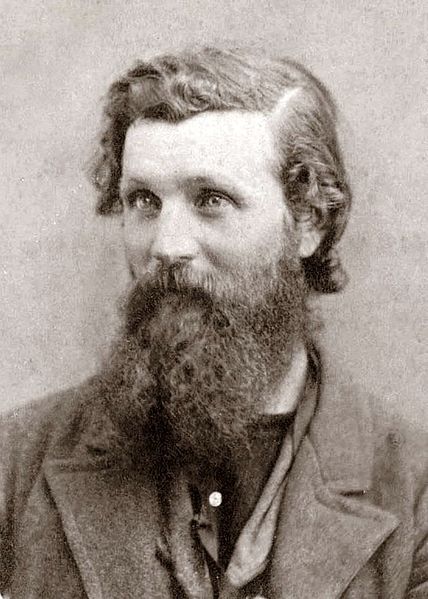
Pictured at left is John Muir in 1872. Muir was a preservationist. This is quite different from a conservationist. A preservationist works to keep things just as they are. On the other hand, a conservationist wants to use resources wisely but will accept the encroachment of industry. In contrast, the preservationist wants industry and civilization in general to leave things alone. No lumbering, no excavations, no damming of streams, etc.

As you can imagine this philosophy ran counter to the commercial interests during Muir's lifetime. His life spanned the era of rapid western growth. One excellent example was the timber industry. Logging in the late 1800's and at the turn of the century was on a tear. Trees were felled by the millions to supply housing for the rapidly expanding population that was heading west.

As I've noted in a few other posts on this site, there were no real logging methods employed during the early years. At least none that made sense. Forests were cut through with no regard to planting for the future. Fire hazards were great since there was no effort to clear debris after the cutting was completed. Many towns went up in smoke and people killed after hot, dry weather set limbs, stumps and sawdust ablaze.

The Beauty and Value of Nature


john muir photo
John Muir essentially spent his life trying to educate people about the beauty and value of nature. He wanted to keep it untouched and pristine.

Most of his wilderness adventures took place in California's Sierra Nevada Mountains. It was back in 1868 that he walked across California's San Joaquin Valley all the way to the high Sierra's that ignited his life long journey as America;s foremost preservationist. Muir communicated his beliefs  to the masses by giving speeches, writing books and essays and battling the lumber and mining interests.

He also battled water interests and tried to prevent them from damming rivers. Muirs writing career bagan in 1874 when he authored a series of articles entitled Studies In The Sierra. The picture to the right is of Muir in 1907.


John Muir wasn't the only voice battling commercial expansion into the wilderness, but he might have been the most extreme one. President Theodore Roosevelt was credited with taking over wide swaths of western land for the purpose of preserving it for future generations. It was in his administration that forest rangers were trained and hired to watch over these public lands. Roosevelt's close friend Gifford Pinchot was a leading advocate for keeping public lands public.

Roosevelt and Muir

muir and roosevelt
Roosevelt and Muir were friends. Muir's 1901 publication of Our National Parks is what first brought him to the attention of Teddy Roosevelt.  Both men would get together when Roosevelt's western travels would take him to California as the picture to the left shows. This picture was taken of Muir and Roosevelt in 1903 at Yosemite. It was at this meeting that the seeds were planted for Roosevelt's forthcoming conservation programs. Roosevelt's conservationist friend, Pinchot, was also a friend of Muir. Muir is credited with convincing Roosevelt to save the areas of Yosemite, Grand Canyon, Sequoia and Mt. Rainier from commercial exploitation. He was successful.


It should be noted that the actions Roosevelt ultimately took at the urging of Muir were not exactly easy. Anyone who has studied Roosevelt knows that he was not on very close terms with the business community. On the other hand, the majority of Congress was. He was met with many roadblocks along the way and it took a degree of compromising to get Roosevelt's environmental bills passed. Even after measures were passed there was still some resistance.


The friendship Muir had with both Roosevelt and Pinchot however was later strained when Muir felt that not enough was being done. Perhaps he felt that Pinchot was giving in too much to the businessmen. It was strained to the degree that Muir simply stopped speaking to them. As I already noted, there is a difference between true preservationists like Muir and general conservationists like Roosevelt and Pinchot. The conservationist will work with commercial interests and set up certain regulations. The preservationist wants commercial interests to just stay off the land.

The Sierra Club


A major achievement during Muir's life was his founding of the Sierra Club which is still going strong. The Sierra Club is probably what most people today connect with John Muir.

Founded in San Francisco in 1892, the Sierra Club is recognized as the most influential environmental organization in the United States. Their mission can be summed as...to explore, protect and enjoy the wild places on earth. There are chapters located across the U.S. with hundreds of thousands of members. John Muir served as the Sierra Club's president until his death in 1914. When you look back at everything John Muir did and everything he fought for, you can realize how the founding of the Sierra Club was his most significant achievement. We're now in the 21st century and the Sierra Club has been around since the 19th century. He certainly left his mark.


sierra nevada range
If you find yourself on a California vacation road trip or if you reside there and take a weekend trip, the reminders of John Muir are almost everywhere. You can visit Yosemite and Sequoia National Parks and be reminded that it was John Muir's efforts that saved these beautiful areas for public enjoyment. If you find yourself on a San Francisco vacation, there is Muir Woods just north of the Golden Gate Bridge in Marin County.


Make sure to also add the Muir House to your California trip planner. Below is a link to our Western Trips visit to the Muir National Historic Site...John Muir National Historic Site

Located in Martinez, CA which is across the Bay to the northeast of San Francisco. It is now the John Muir National Historic Site and includes the house where he lived and did almost all of his writing. The home was built by his wife's parents and he and his wife also resided there. In fact, he spent the last 24 years of his life there. Following are good websites to help plan your John Muir exploration while you're in the San Francisco Bay Area.

Also see our Western Trips visit to Muir Woods on the link below...

Muir Woods Hiking Trails


www.nps.gov/jomu

www.nps.gov/muwo


Sierra Club website   www.sierraclub.org

More historic travel ideas at www.tripsintohistory.com

(Article copyright Western Trips. Photos and images in the public domain) 


Thursday, April 7, 2011

National Museum Of Forest Service History/ Missoula Montana


 The Founding of the National Forest Service

The idea of a National Forest Service was conceived by a man named Gifford Pinchot who went on to become the Chief of The U.S. Forest Service from 1905-1910. Pinchot was a close friend of President Theodore Roosevelt. He was quite wealthy having inherited a fortune from his father who inherited his fortune from his father. The grandfather became wealthy investing in land and cutting timber. Gifford Pinchot's father knew that much of the family's wealth came from deforestation and he regretted what it did to the land. As a result he encouraged the young Gifford to become involved with conservation.

Pinchot and Roosevelt

photo of gifford pinchot


Being independently wealthy and having his brother handle his investments, Pinchot (photo to the left) was able to devote all of his time to conservation. The Yale graduate became nationally known through his work with Roosevelt in establishing the U.S. Forest Service. Prior to this time the government owned land was administered by the Department of Agriculture. Roosevelt who earlier in life had authored several books about the west had built a reputation for himself as being a hunter and outdoorsman and showed great interest in conserving the nations vast wilderness. Pinchot's vision struck the right chord with Roosevelt and the President was in the position to make things happen.

 The National Forest Service and the Logging Industry


Roosevelt's administration was in existence during the latter part of the gilded age. Timber interests had heavy influence on Capitol Hill.

horses pulling load of logsAs an example, U.S. Senators were chosen by state legislatures rather than by popular vote. The timber interests wanted no part of the government interfering with their deforestation. Pinchot, on the other hand, thought that there should be a joint effort between government and private industry to use the resources more wisely. He felt that logging could be managed in such a way to preserve the forests in the long term.

Both Roosevelt and Pinchot favored the smaller timber operations over the large conglomerates. He was witness to what unregulated cutting did to the eastern forests. Needless to say there was a lot of resistance from congress to appropriate funds for the service. When the Forest Service was established in 1905 it was run on a shoestring. Even so, the first forest rangers received extensive training from Gifford Pinchot himself often at his mansion called "Grey Towers". Pinchot was most influenced by Sir Dietrich Brandis who introduced the science of forestry to Britain. In fact he used many of Brandis' methods and structures when he established the Forest Service.


After Pinchot  and others had much of the western forest land surveyed, much to the dislike of his political foes, Roosevelt finally signed it over to the Forest Service, taking it away from the Interior Department. In fact he signed over much more acreage than even his detractors thought he would.

Roosevelt, Pinchot and John Muir

photo of teddy roosevelt and John MuirAn interesting side note involves the conflicting viewpoints between Pinchot and John Muir.

Muir, being one of the country's foremost preservationists, founder of the Sierra Club and proponent of the 1898 National Parks Bill , wanted to see the wilderness unchanged period. Gifford Pinchot on the other hand wanted to wisely manage the nations natural resources for the benefit of the people and for future generations but he also recognized it's commercial value.

 This difference of opinion certainly strained Muir's relationship with both Pinchot and Roosevelt who was also a friend of Muir's (photo of Roosevelt and Muir to the left). Muir however demonstrated his influence with Roosevelt convincing him to designate as National Protected Lands four separate areas including Yosemite.

Gifford Pinchot remained with the Forest Service until 1910 when then President Taft fired him during a controversy he had with the Secretary of the Interior. Pinchot as well as Roosevelt finally arrived at the opinion that Taft was the wrong man to further their conservation efforts. Many historians feel that Taft had very few visions of his own. Pinchot received several awards in his lifetime and entered politics where he served two separate terms of governor of Pennsylvania beginning in 1923. Gifford Pinchot was also one of the founders of the Yale School of Forestry in 1900.

The Forest Service and the Smokejumpers

picture of smokejumpers
Some of the first smokejumpers in 1948
There's another interesting side note about the Forest service and how it's evolved over the last one hundred plus years.

The Forest Service has made a great deal of progress over the decades in the managing forests and in fighting forest and wildland fires. First of all, logging is closely controlled. Prescribed burns take place to prevent undergrowth buildup which can serve as fuel for fires started by lightening or any other cause.

The Forest Service has organized fire fighting crews at with various levels of experience. Smokejumpers are the most highly skilled since parachuting out of an airplane to fight fires is probably the most dangerous of jobs but is effective since it places firefighters in areas unreachable by land travel. A crew called Hotshots operate on the ground but are normally used at the hottest parts of the fire.

There are also crews designated to dig fire lines using the Pulaski Tool which was developed after the Great Fires of 1910. The Forest Service has come a long way and continues to study the fighting of forest and wildland fires. All of these efforts including the fighting of fire themselves are part of the overall conservation effort. The beginnings of this all started during the first decade of the 1900's due tio the efforts of both Pinchot and Roosevelt.

See our Western Trips article on the Pulaski Trail and the Pulaski fire fighting tool on the link below...

The Pulaski Tunnel Trail

There is much more to read about the conservation efforts of both Gifford Pinchot and Theodore  Roosevelt. There were some critical events not in the least the Great Fire of !910. What is important to know is that the joint efforts of Roosevelt and Pinchot were a major influence in how the government, industry and the general public perceived national forest lands. Another very interesting stop while in Montana is Pompeys Pillar where the modern tourist can view the etched signature of William Clark of the Lewis and Clark Expedition. It is located near Billings Montana.


The National Museum of Forest Service History in Missoula Montana is an excellent source of information about the Forest Service. Not only will you find archives relating to the founding of the Forest Service but you will also learn how the Service helped with conservation programs throughout the decades and to the present day. While there is plenty to see right now, a new 30,000 sq. foot structure is set to open during the summer of 2011 located about one mile east of the Missoula International Airport.  The museum address is 1615 South Catlin St., Missoula. The websites below will give you further information and keep you updated on the progress of the new building.


The site below offers additional information regarding Gifford Pinchot:

www.foresthistory.org

(Article copyright Western Trips. Photos and images from the public domain)